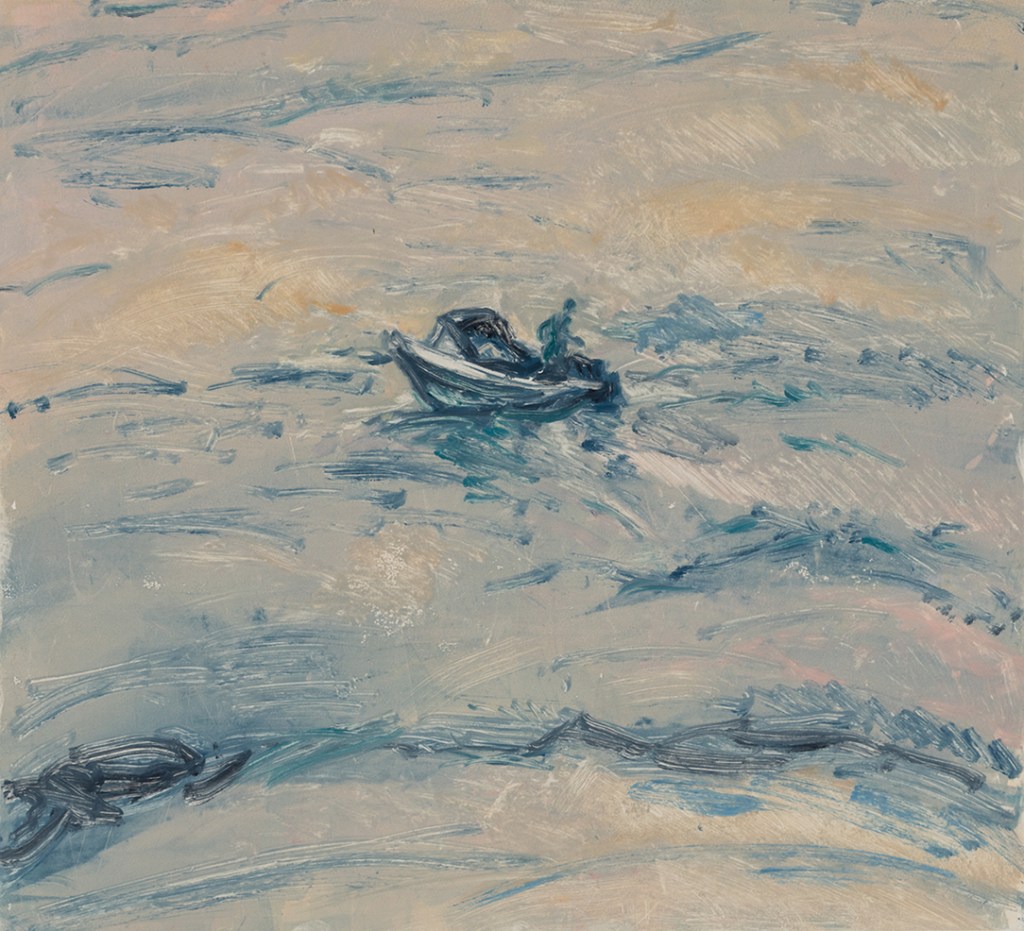
William Mora Galleries
30 April–28 May 2026
Address: 1/60 Tanner St, Richmond VIC 3121, Australia
Steve Cox’s works will be shown as part of a group exhibition.

William Mora Galleries
30 April–28 May 2026
Address: 1/60 Tanner St, Richmond VIC 3121, Australia
Steve Cox’s works will be shown as part of a group exhibition.
When her father, Norm Rowland OAM is almost 100, Robyn returns from Ireland. Initially companion, then carer during covid, she lives with him in the house he built 65 years before.
Their relationship grows through physical and emotional challenges, anger, frustration, grief and love. Poems for Norm from previous years are interwoven here. Heartbreaking and tender, a book created with love and skill: this is the poetic narrative of their shared journey.
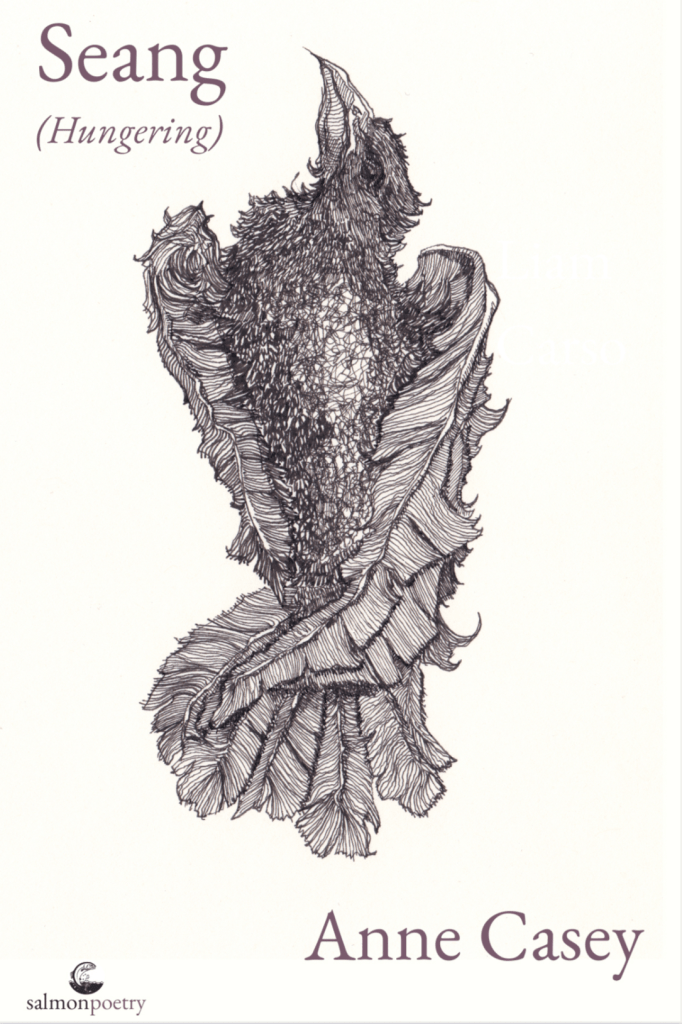
For the 180th anniversary of the Great Irish Famine’s commencement, Seang (Hungering) poignantly reclaims the human story behind the lost history of a group of rebel girls who were daughters of Irish famine refugees to Australia. It seeks to restore voice to these girls and their families, who were silenced over and over during their lives, and who suffered destitution, discrimination, and intergenerational incarceration and hardships largely driven by colonial policies, attitudes and actions in Ireland and in Australia. Incorporating award-winning research and poetry, Seang offers a beacon for the 473 million children in our world today who are impacted by conflict and extreme food insecurity driven by the same three factors – climate, politics and economics.
[Link no longer active.]
Vale Emeritus Professor Christopher Wallace-Crabbe AM FAHA 1934 – 2025
Chris was Professor Emeritus in the Australian Centre of the University of Melbourne, of which he was a founding director. During his long and distinguished career, he was a Harkness Fellow at Yale University, and the Harvard University Chair of Visiting Professor of Australian Studies.
In 2011, Chris was made a Member of the Order of Australia for services to the arts, and in 2015, he was awarded the Melbourne Prize for Literature.
Chris wrote the introduction to Joyce Lee’s It is nearly dark when I come to the Indian Ocean.
The past year has celebrated established mastery and urgent new voices, with David Brooks claiming the Prime Minister’s Literary Award. The sector also saw the release of the Best of Australian Poems 2025 anthology and a vibrant Poetry Month program fostering community engagement.
The 2025 awards season saw Julie Fragar and Jude Rae recognised for their exceptional portraiture and landscape work respectively. Major institutions also celebrated historical figures, with the National Gallery of Australia launching comprehensive retrospectives of modernist painters Ethel Carrick and Anne Dangar.
The visual arts landscape was defined by the opening of the 5th National Indigenous Art Triennial and significant prize announcements. First Nations sovereignty and connection to Country were central themes, while contemporary artists like Gene A’Hern and Jonathan Jones received acclaim for their site-specific and abstract works.
Focus on Patrick White has been renewed through the prestigious literary award named in his honour, won this year by David Brooks. The playwrights’ award also recognised new talent, while fresh critical scholarship continues to examine White’s complex legacy and “dilemmas” in contemporary Australian culture.
Australian Book Review (ABR)
Australia’s premier critical magazine, offering reviews, essays, commentaries, and new creative writing.
Editor: Peter Rose
https://www.australianbookreview.com.au/
Sydney Review of Books (SRB)
A dedicated online literary journal focusing on long-form criticism and essays.
Editor: James Ley
https://sydneyreviewofbooks.com/
Meanjin
Now defunct.
https://meanjin.com.au/
The Monthly
A national magazine covering politics, society, and the arts, featuring long-form journalism and reviews.
Editor: Michael Williams
https://www.themonthly.com.au/
Inside Story
An independent news and current affairs site featuring strong arts and culture analysis.
Editor: Peter Clarke
https://insidestory.org.au/
Island Magazine
A premium literary magazine from Tasmania that publishes high-quality fiction, nonfiction, and poetry.
Editorial Manager: Jane Rawson
https://islandmag.com/
Mascara Literary Review
A bi-annual journal focusing on contemporary writing by First Nations, culturally diverse, and neurodivergent artists.
Artistic Director: Michelle Cahill
https://www.mascarareview.com/
Rochford Street Review
An independent online journal reviewing Australian literature, poetry, and small-press publications.
Editors: Mark Roberts and Linda Adair
https://rochfordstreetreview.com/
Peril Magazine
An Asian-Australian arts and culture magazine publishing poetry, prose, and visual arts with a focus on diverse perspectives.
Chairperson: Lian Low
https://peril.com.au/
Griffith Review
Operating out of Griffith University, this quarterly features public intellectual essays, reportage, and creative writing.
Editor: Carina Garland
https://www.griffithreview.com/
Westerly Magazine
Based at the University of Western Australia, this journal publishes fiction, poetry, and essays with a focus on WA and Asia.
General Editor: Daniel Juckes
https://westerlymag.com.au/
Southerly
One of Australia’s oldest literary journals, published by the English Association (Sydney).
Editor: Elizabeth McMahon
https://southerlyjournal.com.au/
Axon: Creative Explorations
Published by the University of Canberra, this open-access journal focuses on poetry and creative practice-led research.
Editors: Jen Webb and Paul Hetherington
https://axonjournal.com.au/
TEXT: Journal of Writing and Writing Courses
The journal of the Australasian Association of Writing Programs (AAWP), publishing scholarly articles on creative writing.
Managing Editors: Julienne van Loon and Ross Watkins
https://textjournal.scholasticahq.com/
Art Monthly Australasia
The region’s flagship visual arts publication, providing critical discourse and exhibition reviews.
Editor: Michael Fitzgerald
https://www.artmonthly.org.au/
Art Almanac
A monthly guide to galleries, news, and awards, serving as the essential “gallery guide” for the industry.
Editor: Melissa Pesa
https://www.art-almanac.com.au/
ArtsHub
The primary trade publication for the Australian arts industry, covering news, jobs, and policy.
Content Director: George Dunford
https://www.artshub.com.au/
Artist Profile
Focuses on the artists themselves, featuring in-depth studio interviews and photographic profiles.
Editor: Kon Gouriotis
https://artistprofile.com.au/
Memo Review
Australia’s only weekly online review dedicated strictly to visual art exhibitions (primarily Melbourne/Sydney).
Editorial Team: Rotating academic and critic collective
https://memoreview.net/
Runway Journal
An open-access digital platform for experimental art and criticism, managed by a rotating board of artists.
Co-Chairs (2025): Ena Grozdanic and Athanasios Lazarou
https://runway.org.au/
un Projects (un Magazine)
An independent platform for contemporary art criticism, focusing on local dialogue and artist-led discourse.
Editor: Rotating guest editors per issue
https://unprojects.org.au/
Cordite Poetry Review
A comprehensive online journal for Australian and international poetry and criticism.
Editor: Kent MacCarter
http://cordite.org.au/
Australian Poetry Journal
The flagship publication of the national poetry body, publishing contemporary poems and critical essays.
Editor: Jacinta Le Plastrier (Publisher)
https://www.australianpoetry.org/
Limelight
Australia’s leading independent magazine for classical music, opera, and the performing arts.
Editor: Jo Litson
https://limelightmagazine.com.au/
Australian Stage
Provides reviews and news covering theatre, opera, dance, and musicals across major capital cities.
Editor: Review team based
https://www.australianstage.com.au/

Majoring in Painting at Victoria College, Prahran 1989-91 I enrolled in printmaking as an elective. From the Head of Printmaking, John Scurry and lecturer Simon Cooper, I learnt different techniques discovering that this was a medium I could experiment with and one that could inform and feed into my painting. I developed a love of the process and later began to concentrate mainly on monotypes; a combination of drawing, painting and printmaking, they allowed me a more felt response when making and reacting to marks on the plate. Facilitating rapid experimentation and subtle development of the image, the monotype has become an integral part of my art practice.
On a first encounter with Degas’ monotypes over thirty years ago, I felt driven to spend countless hours poring over his sooty, inky blacks; his drawing and abstraction leaving their indelible mark. Degas distilled everything down to its essence, reflecting life and the human condition. Powerful images that had me enthralled, he more than any other artist influenced and prodded my desire and curiosity to experiment with the medium.
The Australian Print Workshop (APW) provided a great space for working in an environment where everyone was making and engaging in a conversation about prints. I’d go there for long stints after initial drawings and usually before I’d begin painting in my studio. Since 2014, I’ve had five wonderful and productive residencies at The Art Vault, the last three working on a body of work responding to Lake Mungo. After making black and white monotypes, a number of them exhibited in solo shows at the Mildura Arts Centre (MAC) in 2020, and then at Printmaker Gallery (PG) 2021. Working in black and white helped make some sense of the structure, form and mood. Preparing the plate, I would either cover it completely or partially with ink, drawing, wiping or adding to the image with tools and rags until it spoke to me of the land. After printing a darker first image I proceeded to work back into the ghost image on the plate. Colour being integral to Mungo I experimented further. I had been overwhelmed by the colour shifts – red to burnt orange, blue grey and yellow. In my mind bringing myself back to the land, I would often refer to sketches and photos both made and taken in my time there. I worked using memory and imagination to feel the subtleties and build-up of coloured layers of sand and mud pinnacles at Red Top and the Walls of China, but also on images of trees struggling to survive in the sand and the mud, and the sometimes still, sometimes windy, blue or grey clouds and the colour reflected skies.

These coloured monotypes were a prelude; small experiments, many discarded. I used a combination of watercolour, gauche and ink, then printed on Hahnmuhle Paper. I had my last and final residency at The Art Vault early in 2021. While there I worked on larger plates; being perspex they allowed me to see the image in reverse and also discover any stubborn, unresolved areas. This time using only coloured Charbonnel inks I covered parts of the plate with a roller creating different coloured areas, working intuitively with brushes to draw, tarlatan to wipe, feel and leave texture, cotton buds to discover small highlights, rags to wipe larger areas of light or wipe out whole areas and rework. Other times I began drawing the image, afterwards introducing colour. An awareness of my tools such as brush and roller marks are evident leaving an imprint of my process on the paper. They reflect a tactile response to my subject, helping me discover the abstract elements on the plate. Robert Watson, one of The Art Vault staff would assist in lining up the damp paper on the plate. Then we’d run it through the press. I always love the element of surprise when the paper is lifted off the plate. I’d invariably use the impression of a first print to make a second or a third, redrawing the plate and reworking it until I felt it was ready; my hope being that it had something of the feel of the ancient land that is Mungo, its past, its present, its beauty and its pain. Over time with the thirty odd images on my studio walls I continue to contemplate the works, deciding whether or not they are successful, completing some and reworking a few, but the majority I leave untouched.
A version of this piece appeared previously in Tech Talk.