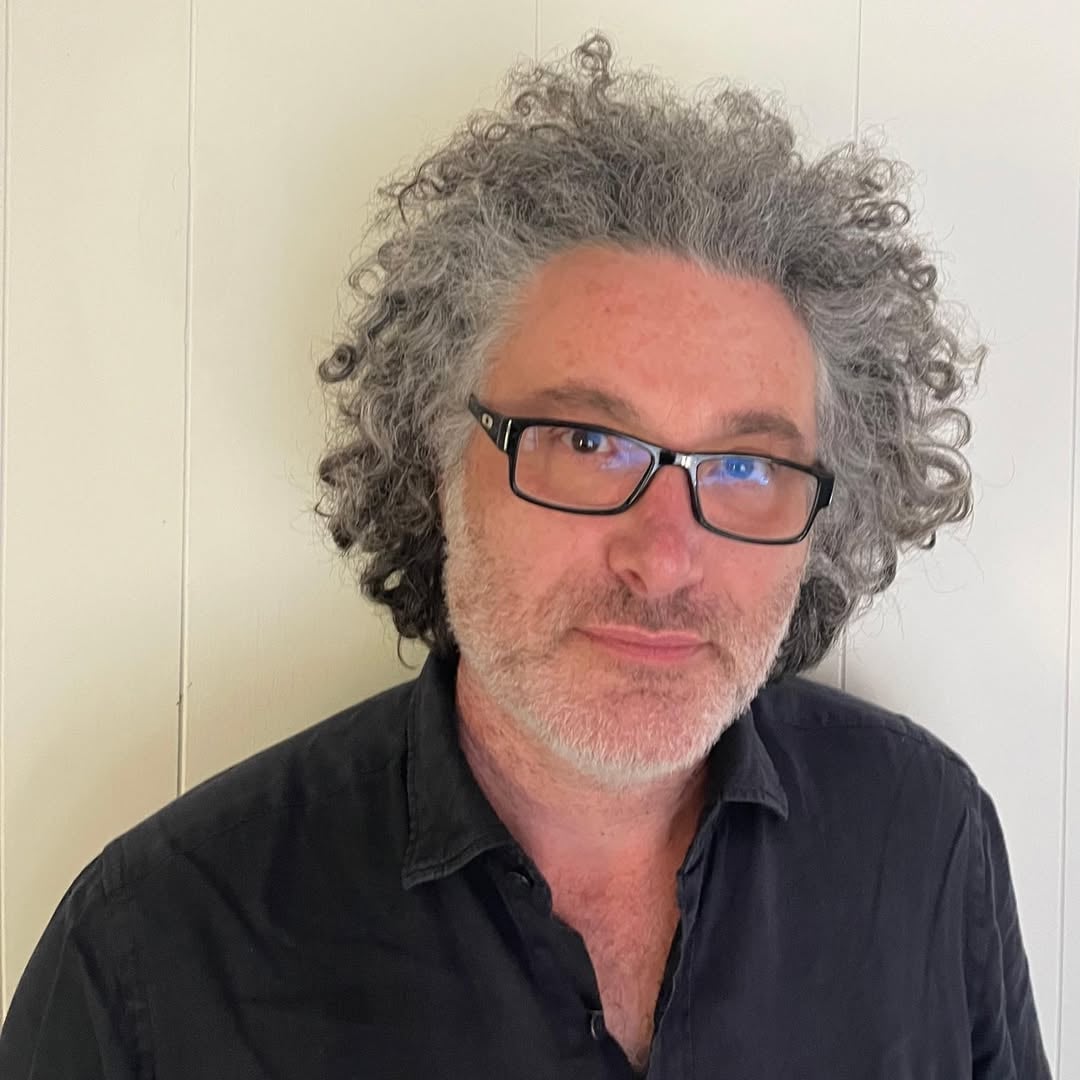
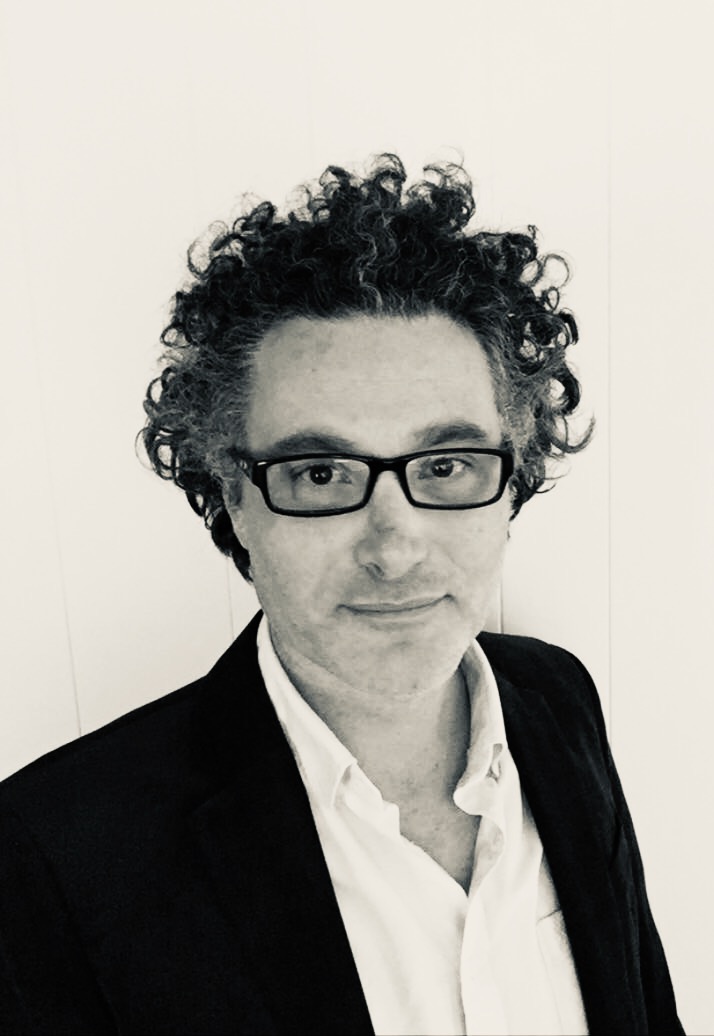
Davide Angelo’s poems have appeared in Australian and international publications. Several have been shortlisted for prizes, including Montreal International Poetry Prize, Bruce Dawe Poetry Prize, Melbourne Poets Union International Poetry Prize, and The University of Canberra International Poetry Prize. He lives in regional Victoria, with his two daughters.
Near the peak of Mount Alexander, it rains.
It’s where the fire stopped, where black outer barks
conceal darker anatomies, hold the mountain,
keep the avalanche intact.
Beyond the crest, the sign reads Causeway.
The voice of the map is passionless, arbitrary.
We sit in silence, two cups filling, searching
for a better way to describe a leaf on the wind.

We’re living on the crust of this star.
The oaks have been dying for months,
dying in order to live again and we laugh
because it’ll be Easter Sunday soon.
We search for the Dog Rocks, watch the abseilers
in the briefest free-fall, see the peaks of Tarrangower
and the Pyrenees range, talk among the granite boulders
where eucalypt trees have grown in twisted shapes.

Each time you tell me about the old silkworm
farm, I look toward the mountain, feel the weight
of the city we left all those years ago.
The apple groves in rows are pruned, shaped like bowls,
the memory of sunlight penetrates the canopies.
But it’s the Oaks we always come to see,
the Valonia Oaks planted in 1900, surrounded
by ropelike strands of younger trees.
Dog Rocks was shortlisted for the Bruce Dawe Poetry Prize, 2020 and was published in The Blue Nib Literary Magazine.
The days were long and hazardous, full of the future’s brutal offerings.
Every backyard had a burn barrel and you could burn anything
And everything, even nightshade and never was a blade of grass scorched.
I remember the priest who (I learned later was just a man)
Asked me to call him Father, promised to release lost souls trapped
In what he claimed was the void between this life and the joys of heaven.
The inner suburb rose out of the volcanic plains, the quarry
Blue basalt curb sides, chimney spines and foundation stones
As prologue, the lake, a mirror scummed over. On scaffolds
In factories, crescendo of small repetitions, infernal over-time
Doubles of our ghostly mothers and fathers and multitudinous paths out
To be free of emergency, to be free of struggle and abstraction.
How we thrived in the sweep, in the distances between us and the outskirts
In dark blue-collar monochrome, indifferent to our stilted dialects
We licked our plates clean as an easy expression of love.
I loved all the mothers of my street mothering me, simmering ground
Coffee beans and sugar, talking quick and loud, their hair hidden
Under hijabs that I guessed was luxurious and raven black. I loved
The blue lady of the milk bar, her blue dress, coat hanger antenna radio
Static floating out darkly, showed me the shape of her body through the fabric.

There’s a carpark where our house once stood. They even took the tilted apple tree
Where I cruelly peeled chrysalises off its mottled limbs. My council believes
In the mystical inclinations of clean concrete, sends out experts daily to prepare
The solvent as a sacrament to vanquish dark delinquencies. But the skateboarders
Have learned to catch themselves with their own hands. I’ve read the book about risk
How risk is the trick to ward off neuroticism and future loneliness, how my children
Need to climb a tree, become experts in the art of falling, feel the gravity of playing
Rough to win, learn that the ground under their feet is a boneyard.
One morning years ago, after the rain stopped, I took them to the snails feasting
On loose rusted nails in the palings (black shapes, impetuous shadows, slow silver
Eyes on grave wood faces) of our failing fence. We listened to the banter of the season
Its hurried claims, electricity escaping from the wires, wings unseen, rattling loose
And fast. How do I explain a mystery as death in the service of art
How it can only be solved by observing closely? It’s no coincidence we begin
Screaming or in solemn silence, both accorded the same deference.
And now, my daughters’ good luck animal on a bed of cotton balls
Almond shaped eyes like mine, baptismal pools, mirrors of memory
And dangerously high places. Sometimes it’s hard to resist leaving
The ground after you’ve buried something beautiful and all that’s left
To speak of is the mound and the dirt under your fingernails.
The Mound was longlisted for the Vice Chancellor’s University of Canberra Poetry Prize, 2023 and subsequently published in Being, 2023.
Escape joyful strains, a walk-up flat
Shoes strewn on a narrow patch of porch
Outgrowing the blockwork.

One suburb over, emerald haze of north
Follow father’s gait, serpentine lines of Monterey
Pines and English elms, a hand-made lake.

The sky is a page of Mediterranean water.
Angle for vision in the bluestone shadow of
Pentridge Prison, screw shoeless feet deep

In the cool Coburg grass, cast lines baited
With bread balls and Hail Marys full of grace
Into the blue-green algal bloom.

Sleeping carp mimic dead leaves. Mud-skinned
Locomotions of tadpoles, heads full of eyes
Outlive each transfiguration, hold the lake

And their children in their mouths. Under the slide
Indecipherable cursive tags, cacophony of vulgar
Alliterations, anatomy and verb.

Home is a gathering of hands loosening the narrative
La mattanza, ritual killings of tuna corralled into nets
Men armed with gaff hooks whisper Gesù, mutilate

The surface of the water. Great aunts unknot Sicilian
Sunlight, pluck snails from tall grasses, crack sea
Urchins open, take living corals to their mouths.
Note: “Joyful strains” is taken from the lyrics to Peter Dodds McCormick’s lyrics to Advance Australia Fair, national anthem of Australia. True North was published in Live Encounters Magazine, 2021.
To tame and cure this trembling house
The owners have lovingly cancelled out the roadway
With whale songs in door hinges, steady Balearic beats
And downtempo deep house soundscapes.
Built in 1950 and meticulously updated by an old friend
Who came to mend a broken affection and smudged
‘Unstable elements’ with a burning offering of sage
Because surely, someone must have died here.
The house’s heart lies at the very end of a long corridor.
The beginning of the universe is buried right under our feet.
If frogs are known as indicator species, take one through
The generous living room as an indicator of future happiness.
We’re most vulnerable at both ends of the arrow.
Inside the open fireplace, glass is an unbreakable honeyed mass,
At its most fragile as it spools and cools into form, invisible
Until it cracks against the wings of sparrows.
Open House was published in The Blue Nib Literary Magazine, 2020.
There’s an argument going on whether
It was Yeats or Éluard who wrote
“...there is another world in this one”.
It’s not a stretch to assert the boulevard
Glowed Lorca’s silvery swarms or plastic bags
White as moons, ran red lights
As if in some dream. Inside every surface
Quiet by contrast, we planned a lifestyle
On acres, took turns nursing a loaf of bread.
We held hands while hunting for Miro’s
Representations of the Catalan people
In sandboxes for subconscious minds.
It’ll be years before we know the power
Of the humourless smile.

In the half light, in the half-life,
Moths want to live again.
Bones of wood and steel hold the sky.
I’ve never slept so little but so well inhaling
And exhaling against death. And the stars
Are hardly what the kids are interested in.
Today, I ran from a bee no one else could see.
Tomorrow, I’ll take my daughters to the beach
Walk across the whiteness of sand that mirrors
So tenderly, the ceaseless currents.
Even whales, before they were whales
Had the temerity to walk into oceans
And into their futures.
Word of the Year was published in Live Encounters Magazine, 2021.
‘…one of them caught our eye, the one in the centre…heading towards the mountains…’ —Werner Herzog, Encounters at the End of the World
The mountain is not indifferent
to our incantations or the slow rumble
of magma that wakes the wilderness’ malice.
My eyes are the first in 30,000 years
to see pigment blown over hollow bones
on the cave’s face.
Last night I dreamt I carried my own hands.
But why?
The city of gold exists
because we trust our eyes.
There was a time when we were first
spoke the very first word
told the first lie, made the first kill
felt the first wave of remorse
only to forget for the first time.
Who imitated the cicadas first
stole their tymbals, climbed the tree
and made the first drum?
I storyboarded this dream
a jump cut     the signal cycle         two rhythms
of the traffic light
tick               tick           tick
and the red hand
on the red man
could be the same hand
making art in blood
and memory.
One of them catches my eye
the one in the centre
heading towards the mountain
to the soundtrack of eagle screams
and leopard growls
and like him, I want to live
between actuality and narrative
—humiliating the landscape.
Beating his own breast
drinking from the opened ground
the first monkey climbs him, claims him
as the mountain.
Mountain at the End of the World was published in The Blue Nib Literary Magazine, 2020.
Rooftops are lit, shadows tremble wet leaves
Until the sun has its way, conjures the water’s
Invisible retreat into the cloud. Under the eaves

With all its dark stars, I lay awkwardly on the old couch
Between the dog and his lamb bone, my daughter’s
Angel-winged pink pony digging into my back.

The dog’s dreaming how high to pile the dirt mound.
I’m lost in eddies of mould, a sleeping rockface
With fingerholes wide enough for climbing.

The medical centre is shaped like our house.
An old dog-eared National Geographic of sorrows
Breaking seasons, a forest before and after it was felled

And the artist who built a wooden ladder that reached
1,650 feet into the Quanzhou sky, only to set it on fire.
Grey-headed flying foxes hang like blossoms

Echolocations forming dark musculatures.
Snails leave their slow silver on the body of the old oak.
The dog’s stalking shy skinks baring blue tongues

In bluff warning beneath the back verandah steps.
If the scarecrow fails again, I’ll give him the side-eye
Like a crow, peck at giant worms of air, stride around

The vegetable patch as though the whole world is a narrow ledge.
We re-dress the scarecrow in my flannel shirt and acid-wash jeans
Fatten him with viscera, down feathers of waterbirds and leaves

The colour of scattered sunrises. When she asks why she lives
In two houses, I daydream a wheatfield beneath a sky empty
Of crows.
Note: The title of this poem and the line “sorrows/Breaking seasons” is adapted from William Shakespeare’s Richard III, Act 1 Scene 4 Line 78 “Sorrow breaks seasons and reposing hours.” Breaking Seasons was published in Live Encounters Magazine, 2021.
That face! The combination
that hinted all along how you began
and how you’d end.

I’m watching reruns,
reading interviews and transcripts, studying
your verticality and subtle slippages.

In this reconstruction, this
reverie, the sky falls
and freezes in you.

You are saved.

Here it’s still raining. Cars have stopped.

In Alexander Square, Moscow,
time can be felt in architecture.
A procession of newlyweds genuflect
at the foot of the obelisk, kiss
before the eternal flame.

Today is the first day.
Of what? Let’s say, “Happiness”.

This is a curious segue
between everything
and everything’s opposite.

We’re just a wine-dark drop
in Homer’s sea.

A dolphin breaks the surface to catch its breath,
the world falls silent in your loving eye.

If we were friends, I’d eat what you eat.
I’d be brave, climb the spines of mountains,
join you in the seal hunts, search for fetal
duck eggs or razor clams, gladly accept
the Inuit’s offering of a knife
and a seal’s eyeball.

In the dark cell
of an Uzbek steamhouse,
your body is handled
like meat.

In Namibia, the chief offers us
the tribe’s very best unwashed
warthog anus.

Behold the worst meal of my life.

We’d laugh that everything we put in our mouths
could kill us.
And I’d tell you about

Mazara del Vallo, how my father drew out
a sea urchin’s five folded star,
resolute between his forefinger and his thumb,
and the cycle of hand movements
when he showed me how to pluck snails
from the tall grasses.

In a room, near old town Colmar,
sometimes known as Little Venice,
you must have been ambushed by a colour,
a song by the Ramones, a feeling as strong
as death, as sweet as love.

You promised to go back
to the Dayak of Borneo
for the harvest.

I still have the napkin
where I wrote down
what you said, verbatim:

You know, we’re all going
to end up ground under
the wheel.
Note: “how you began/and how you’d end.” is adapted from Elliott Smith’s song Strung Out Again, featured in his album From a Basement on the Hill (2004) “your body is handled/like meat.” is adapted from Leonard Cohen’s poem A Thousand Kisses Deep, published in his collection Book of Longing (2006). “Wine-dark” is drawn from Homer’s epithet for the sea, translated into English as “wine-dark sea”, which appears in the Iliad and the Odyssey. The italicised lines are Anthony Bourdain’s words, quoted verbatim from his television programme No Reservations: Namibia and from Matthew Clayfield’s article “Anthony Bourdain, the anti-foodie foodie”, published in The Monthly (2017).
Over time, grief and loss change shape. So much of what remains lives in gesture, language, and the things we learned without ever formally being taught them. I know there are those of you out there who have lost the most important people in your lives, and I often find myself thinking about this great mystery. What is this life if it were not for them? To have learned, to have watched closely, to have listened, and now, without being told, to know where to place our hands. I think I can make some guesses about life and its meaning, but I cannot make sense of death, or what life there may be after it. I believe in the mystery of it all, and can only really rely on memory, however inaccurate memory itself may sometimes be. Perhaps memory is the afterlife. I wrote this poem about my father, and I was fortunate enough to have it included in the Montreal Poetry Prize anthology in 2020.
Davide Angelo’s poems have appeared in Cordite Poetry Review, Overland, WA Poets Inc, Visible Ink, and elsewhere. In 2019 he was awarded Second Prize in the Melbourne Poets Union International Poetry Prize, long-listed for the University of Canberra Vice Chancellor’s International Poetry Prize and received a Highly Commended in the Ros Spencer Poetry Prize. He lives in Bendigo, Victoria.