Here’s your latest digest of creative writing, literary prize, and visual art submission opportunities closing over the coming two months (mid-November 2026 through mid-January 2027). This update highlights freshly opened Australian windows—including Vagabond Press’s December manuscript call, the inaugural Whitehorse Art Prize, and the $100,000 Ramsay Art Prize.
Meanjin (Autumn 2027 / Edition 86.1): Welcomes short fiction (up to 5,000 words), non-fiction essays/memoir (up to 5,000 words), and poetry (up to 3 poems) on the theme of “Storytelling” through 27 November 2026 at 6:00 PM AEST, primarily from Australian writers. Guidelines: https://meanjin.com.au/about-meanjin/get-in-touch/contribute-to-meanjin/
Vagabond Press (December 2026 Open Call for Manuscripts): Accepts full-length individual-author manuscripts of poetry (60–100 A4 pages) or prose—short stories, essays, novellas, novels, art books, and memoir (100–250 A4 pages)—from 14 to 18 December 2026 (closes midnight AEST). Requires a minimum of 3 prior literary publications. Guidelines: https://vagabondpress.net/pages/submissions
Romance novels/novellas first released in 2026 by Australian/NZ authors
$60 AUD (members) / $80 AUD (non-members)
Romantic Book of the Year recognition across eight categories
Visual Art & Photography Calls
Small Works Art Prize 2027 (Brunswick Street Gallery): Welcomes 2D and 3D submissions (including photography, printmaking, painting, drawing, and sculpture up to 35 × 35 × 35 cm) from Australian and international artists until 15 November 2026 (Midnight AEDT), with all eligible works exhibited in Fitzroy and over $15,000 AUD in prizes. Details: https://www.artshub.com.au/opportunity-classification/awards-prizes/
Summer Small Works Show & Prize 2026: Accepts painting, drawing, photography, printmaking, mixed media, or silent video up to A5 (14.8 × 21 cm) responding to “Emergence” until 22 November 2026 at 11:59 PM AEDT, featuring a $1,000 AUD non-acquisitive first prize and exhibition inclusion (listed via UNFURL: https://unfurl.online/2026/11/07/submissions-diary-7-november-2026/).
Material Works Art Award 2026: Awards a $2,500 USD purchase-prize and online profile for visual artists and photographers worldwide (18+; $40 USD fee), closing upon reaching 300 applications or by 6 December 2026. Details: https://materialworksart.com/main
Ramsay Art Prize 2027 (Art Gallery of South Australia): Closes 11 December 2026 at 5:00 PM (Adelaide time) for Australian artists aged 18–39 working in any contemporary medium ($50 AUD fee), awarding a $100,000 AUD acquisitive top prize and finalist exhibition at AGSA. Details: https://www.agsa.sa.gov.au/whats-on/ramsay-art-prize/
Collie Art Prize 2027: Closes 11 December 2026 for Australian artists working in painting, photography, and sculpture exploring “Identity”, offering a $62,500 AUD total prize pool including a $50,000 AUD acquisitive top prize. Details: https://www.collieartgallery.org.au/art-prize-2027/
Annual Photography Awards 2026: International photography competition ($30 USD single photo / $40 USD series up to 8 photos), closing 13 December 2026 with a $2,500 USD overall cash prize. Details: https://annualphotoawards.com/
Whitehorse Art Prize 2027: Inaugural acquisitive award for Victorian artists across painting, works on paper, and ceramics inspired by the natural environment, closing 15 December 2026 with a $36,000 AUD prize pool ($20,000 Main Prize, $10,000 Local Prize, $5,000 Ceramic Prize, $1,000 People’s Choice). Details: https://www.creativewhitehorse.vic.gov.au/Art-prize
Indigenous Visual Arts Industry Support (IVAIS) – Open Competitive Grant Round 2027: Australian Government grant round supporting Indigenous visual arts organisations and practitioners, closing 31 December 2026 (AEDT). Details: https://artsgrants.gov.au/
Varuna is Australia's National Writers' House — offering writer residencies, fellowships, and online writing courses. Located in the Blue Mountains, NSW.
KYD is a vibrant and eclectic online magazine of commentary, essays, interviews, fiction and reviews. We also curate an online writing school and a series of prizes and awards, as well as offer mentorships and other high-quality editorial services to writers at all stages of their careers.
A submission platform that makes finding a home for your work easy. Find calls and submit to magazines, presses, and contests. Submit to many organizations at once directly from your portfolio of work or submit directly to a call.
Run by enthusiasts, FilmNeverDie joined the global movement in film & Polaroid photography back in 2011. Film is a very special medium that holds you back in the moment!
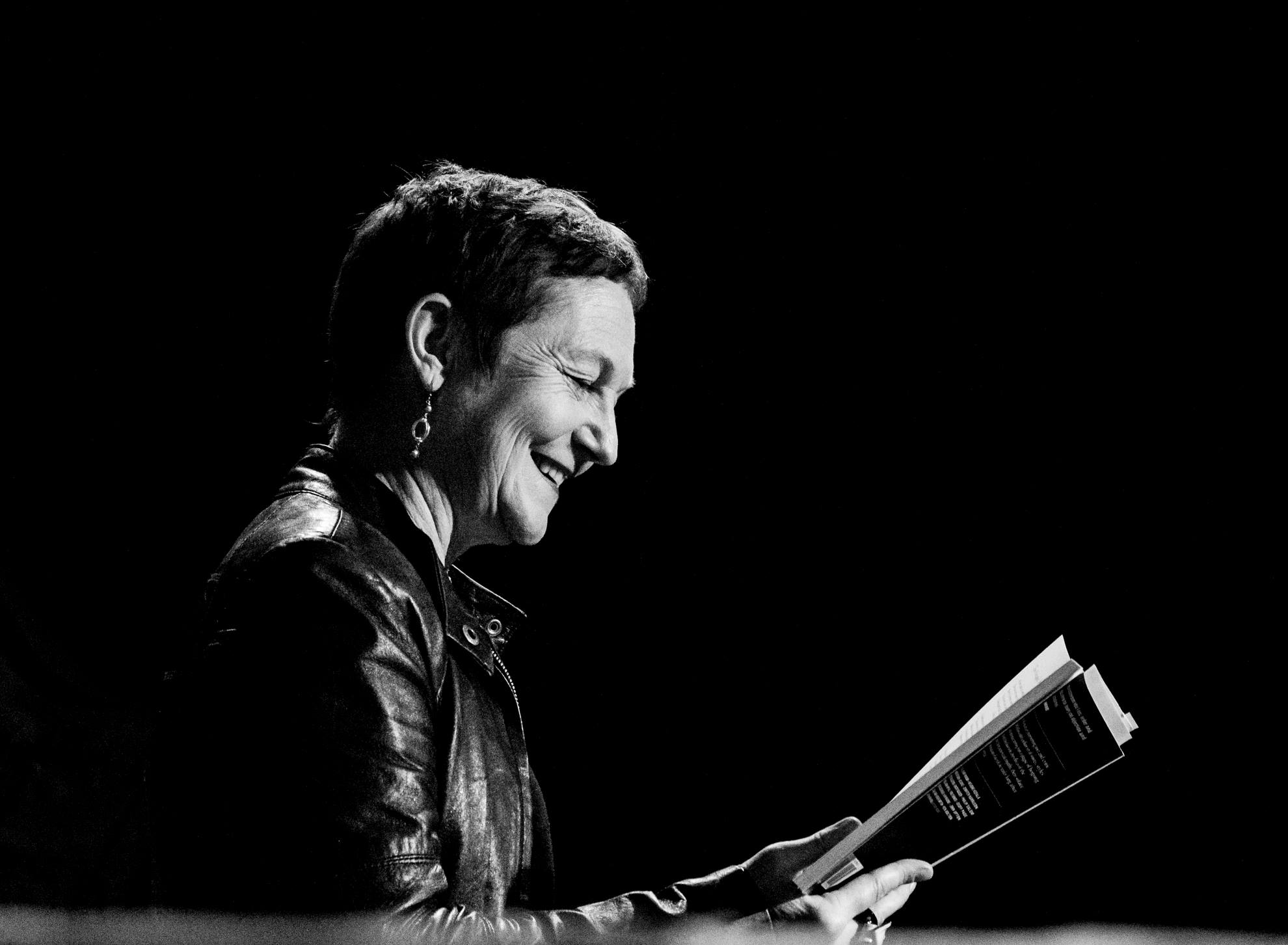
Dominique Hecq is a widely anthologised and award-winning poet, fiction writer, essayist and translator. She lives and works on Wurundjeri Woi Wurrung land. Hecq writes in English and French and sometimes across languages. Her creative works comprise a novel, six collections of short stories and nineteen books of poetry. Errances (Recent Work Press) has travelled the world in 2026. She is currently writing a lyrical essay titled ‘Unleashed: My Life as a Dog’, a love poem to Artaud, a Kelpie. This may be a kind of farewell to Jacques Lacan.
Among other honours such as the New England Prize for Poetry the Martha Richardson medal for Poetry and the Carmel Bird Digital Literary Award, Dominique Hecq is a recipient of the International Best Poets Prize administered by the International Poetry Translation and Research Centre in conjunction with the International Academy of Arts and Letters, and the James Tate for poetry.
… I tried to make the face that spoke to me tell / the secret —Antonin Artaud
I’m three. Little monkey jumping on my bed. Home alone. I’m getting a dog with goldilocks and floppy ears and no tail. Boucles d’or. High high high I jump. Oh, so high.
Car doors clang shut. Here they come, now. Papa et maman. With Peggy! C’est maman qui a choisi le nom, says papa. Oh non! Boucles d’or.
That’s all there is: all of Peggy Lee traded for Goldilocks on my birthday. And Peggy for mummie. C’est trop injuste. Such dejection unleashed.

At the RSPCA we wait for RG, a Kelpie. He’s got scruffy black hair, golden coins for eyebrows, a deep frown. RG scampers over to me like he knows me. A lick, tentative. I walk him out into the paddock on a slip on leash. He darts hither thither, hither thither. Sniff sniff sniff. We sit in the visitors’ enclosure. He wags his tail close to the ground. He’s all bristles when other dogs bark in their cages.
Congratulations says Hetty at the desk. RG’s from a farm. He worked sheep. He’s very timid. I try a pat. RG cowers. Only a scratch under the chin, says Hetty, like this. Hetty demonstrates. This will require a lot of patience.
Can I change RG’s name? I ask timidly.
But of course, it’s part of the fun of rescuing a dog. What will you call him?
Artaud. ARR-TOH.
Hetty updates RG’s details on his file. I’m surprised to see my father’s name next to Artaud. Ponder the word rescue.
I purchase a harness and a long leash. Orange. It looks good on Artaud’s coat. To the car. Luke’s our chauffeur, now. Artaud hops in the boot, unprompted. I sit in the back, dangle my hand across the seat to reassure him. He soon falls asleep.

Spring feels like fall. I drop baby potatoes in holes my father digs. Plop plop plop. I’m bored. I know Peggy’s waiting for me in the laundry. I sneak in. We roll on the tiles. It’s cold. Peggy’s eyes are sad. I totter to the sink. Reach for my mother’s make-up case. Grab her coral lipstick. Viens, Peggy I say, luring the dog into the toilet. I lock the door. Paint a smile on her lips. She’s all smile now!
Footsteps. Heartbeat a stampede: I can’t unlock the door.
Dominiiique?
Ouiii?
I do as instructed. Slip the key under the door. Free!
Ma fiiille, says maman—My girrrl, as she furiously pats Peggy. Not a glance at her real daughter. I feel abandoned, again. Replaced by a bitch.
Qui est-ce qui a fait ça ? Roars Papa. Who did this?
Un p’tit peu moi-a, un p’tit peu Peggy. A little bit me, little bit Peggy.
Au coin, says father. I am banished, again. Corner time out.
I see pink. The walls are papier rota, freshly painted. I’m dizzy. Something breaks. Love is scary. I hate aller au coin. It feels like a million years. Au coin I practice unfeeling. I renunciate love.
It all comes back to me à soixante piges—at sixty! The baby pink. The mixture of guilt and shame. The sense of abandonment and banishment.
Strictly speaking I was not abandoned. One is abandoned where there is a relationship based on a recognition of difference. There was no such recognition. I was just an extension of my mother. J’étais sa perruque, I was her wig, her hair extensions. Later I will realise that she resents me. Envies me. I became the coral absorbing her envy.
It all comes back to me à soixante piges. The mixture of guilt and shame. The little white socks scampering to school past farmhouses and barns, le petit magasin du coin, the little corner shop where I’d buy cherry lollipops that made my tongue red quiet, the hairdressing salon releasing beehive coiffes and the tall trees with yellowing leaves and the suppressed feeling of being banished. Love is scary. My academic success is contaminated by guilt and shame and envy and my father’s impossible demand. In my head he commands me to jump higher and higher. I’m a monkey doomed to fail. At school I say that I have no father, knowing full well he’s doing his delayed military service.  I sense that he has to pay for my insolent arrival into the world. I banish my father.
Twenty years later, I flee. Banish myself from family, church, country. A rolling stone gathers no moss.
Banishment: an attempt at separating oneself from the august and placid expanses where the father’s sublime Death, and thus Meaning, merges with the son’s ‘self’, writes Julia Kristeva, (but where a daughter can very easily become trapped), mummified, petrified, exhausted, ‘more dead than alive’… So flee this permanence of meaning. Live somewhere else, but in the company of paternal Death.1

Artaud runs in his sleep. His little feet make darting motions. He coos and whines and whimpers. He dreams of sheep. Of fleeing, maybe.
At break of day I glide downstairs to check on him. He’s vomited his dinner. Chewed his harness. He looks mortified. Recoils and trembles as though he thinks I’m going to hit him. Artaud le Momo, come outside, I say. No one likes being sick. He follows me. Stops in the doorway. Come, boy, come.
Artaud is an anxious dog. He is scared of Luke. He is scared of all blokey blokes. Heavy steps. Loud noises. Sudden movements. Brooms, towels, the washing basket and Mr Hoover.
I pet him on the head, now. Tell him I love him.
To love is to survive paternal meaning. It demands that one travel far to discover the futile but exciting presence of a waste-object: a man or woman fallen off the father, taking the place of his protection …2
I don’t like Julia’s suggestion, though I suspect I did just that, fleeing from one hemisphere to the other. Away from the primal father and his woman, maybe?
Artaud as father substitute. My totem, as Sigmund Freud reminds me.3 I don’t like the idea either.
Let’s go for a walk, Artaud. I’m a trainer now.
Hither. Thither. Hither. Thither. Is it Artaud or me pulling on the leash? Hither. Thither. Snif snif snif. Il était une maitresse qui promenait son chien. Elle avait dans sa tête de vraiment drôles d’idées. Sa tête faisait rouli roula. Sa tête faisait rouli-roula. Deux pas en avant. Deux pas en Arrière. Deux pas d’un côté. Deux pas de l’autre côté. Artaud, Momo, we’re not moving. Backtrack. Walk with me. Artaud sniffs the air now. He smells tons of things I can’t smell. Sees so much more, too. He’s on high alert. God, I love him. At the playground a woman barks: Are you walking your dog or is he walking you? The latter, I answer. God I’m hopeless.
Keep up, Artaud.
Now, that is strange: RG, my analyst’s initials. Artaud is my analyst now.
The term 'transference' first appeared in Freud's dream book with reference to the displacement of affect from one idea to another.4  Later, it came to refer to the patient's love/hate relationship with the analyst as it develops in the course of the treatment. Jacques Lacan argues that though transference often manifests itself in the guise of strong affects such as love and hate, it does not consist of emotions as such, but of the structure of an intersubjective relationship.5  In The Four Concepts of Psychoanalysis Jacques articulates the transference with the Subject Supposed to Know, which I’d rather translate as Supposed Subject of Knowledge. According to this model, transference is the attribution of knowledge to the Other, the supposition that the Other is a subject who knows: 'As soon as the subject who is supposed to know exists somewhere … there is transference.6
For Jackass Lacan, however, this Supposed Subject of Knowledge need not be a physical person. This subject may indeed be a body of work—like this text. This implies that transference can manifest itself with reference to three instances of the Supposed Subject of Knowledge in ‘Unleashed’: the author, the work and the reader. Or the author, the work and Artaud.
Oh, you may object, dear reader, but Artaud is not part of the Symbolic. Artaud is a dog.
Yes, but he communicates other-wise. Besides, he knows things I don’t. Here comes the rain…
Jackass says that many animals speak in a sense when they are in pain or in need: You have only to observe a pet to see that a being deprived of language is quite capable of making calls on you, calls to draw your attention to something which, in some sense or other, it lacks.
So, animals can articulate a demand. But they lack access to the dimension of the signifier. If I say sit, Artaud sits. If I say spit. Ditto. If I say Sss he now sits. Does that mean Artaud lacks access to the symbolic means through which my reality is constructed?
Let’s go for a walk.
Artaud saunters all over the place. Sniffs all over the place. Pisses all over the place. Now he lunges at a fluffy designer dog. Now I pull the leash. He pulls and I pull now. I am frustrated with Artaud, the wandering analyst who does not look at me.
Sorry, Artaud, I say when we get home. I need some time out. I release him in the backyard. Artaud snorts.
It suddenly occurs to me that Artaud doesn’t bark. None of Antonin’s mots-souffles / breath-words or mots-cris / howl-words. It suddenly occurs to me that this language obsession of mine is a pathetic fantasy. The fantasy of a dog named after a poet who understands human language is nothing else than the fundamental fantasy: the unchecked connection with the Other.
Sit Artaud.
Shit Antonin.
I resolve that Artaud will never attain the status of parlêtre. Nonetheless…
Nonetheless, Artaud dreams. Nonetheless, Artaud doesn’t bark. If I analyse these two statements, deep down I ask whether a dog has an unconscious and whether there is something wrong with an Artaud who doesn’t seem able to articulate a demand.
This will require a lot of patience.
Jackass stresses that all speech is a form of demand—specifically a demand for love. And yet Jackass also notes that despite the universality of language, or the dimension of the symbolic, human beings are prone to méconnaissance, by which he means, to misunderstand each other. So, it seems that I mistake a bark for a word. Ah, l’Amur!
Let’s go for a walk.
We go to the cricket ground. It’s fun. Scary: Artaud doesn’t know what to do with other dogs, except other so-called working dogs. He nips a designer dog. It’s getting complicated. I step onto unbeaten tracks when I say yes, I’m the dog’s owner. I enter ontological pathways that conceptually and socially and legally construct the person I am when I say the word owner.
This f…ing dog is f…ing dangerous. You should never take him off the leash yells the other owner who has kicked Artaud. Hard. And who now pursues us: if your dog attacks my dog again I’ll f…ing kill him. I keep up, shaking. Good boy. After all Artaud only defended himself. Or warned the designer bitch that bit his ear first.
High five, Artaud!
Lulled by the night’s lingering breath, the city hibernates. Funnelling wind at your back, you skirt the creek. Follow the trickle of bruises the light leaves in its wake. You take the path down to the bridge, the no-sun enfolded in fog. Eucalypts rustle. Reeds rumour. Australian wood ducks, chestnut teals and a lone hardhead on corrugated water. Magpie larks chatter in a she-oak. A nankeen night heron darts in your path as if to say you don’t exist. Under the bridge, a black swan on a nest intermeshed with plastic. Now the wind embraces you. Mud sucks at your boots—ssksskssk. Rainbow lorikeets, fairy corellas and musk lorikeets clatter about. You climb the escarpment. Here, creeping bent grass, English broom, arum lily, prickly pear, periwinkle overflow garden fences. Gusts of wind through veils of bridal creeper and poison ivy.
2.
Walk with me, says the voice drowning in its own rasping sound. You become it, the voice, a shapeshifter like the creek itself, brimming with unspoken thoughts, voiceless bubbles, breathless refuse.
Waterfall. Murky calm where the path tilts and narrows.
Here, the water curves and swerves in its owns bed, pulls at silt. The current pushes it out unseen, against the sunken stepping stones.
Here, the water swirls, froths, falls and rushes towards the edge land of daydream. Towards the immargination of the page.
3.
A wattlebird babbles on the other side of the window. I replenish the water bowl. Spot a honey eater hopping about in the fuchsia.
My hand yawns. It is a beak opening.
Water breaking at the touch of a feather.
I am a magpie. Warble a wattlebird prattle.
I feel for the shape of a poem.
I live and work on the land of the Wurundjeri people of the Kulin Nation, the sovereignty of which was never ceded. I acknowledge its traditional custodians, offering respect and gratitude to their ancestors, elders and families past, present and in perpetuity.
Australia always was and always will be, Aboriginal land.
I feel shame, not quite guilt, for knowing so little about the languages, cultures, and customs of the Kulin Nation. For purloining the bird’s call. For naming it prattle.
(To unwrite the I from the poem. Think of it.)
4.
Words are possums crawling up the walls of silence. They have razor-sharp claws. They pounce. They can see in the dark. They will poke the apple of your eye. Hook your mouth shut. Rip you to shreds. Tear up your dreams one letter at a time.
Pause.
Consider the damage to the root of your tongue.
Don’t worry: they will burst the blisters tenderly. At dawn they’ll scuttle around the idea of noise. Then they will burrow under the vault of your ribs and nibble at the chambers of your heart.
Here, they will persuade you to shrug off your graphomania, glossolalia, xenolalia. Tendency to anaphora and… apocrypha.
5.
Cold bites, breath dissipates gossamer mist nudges the windowpane.
Sky low over Melbourne.
The sun wears a corona of grey that keeps it away from the day like a foreign body’s swathing so intimate it blinds.
I fumble for the shape of a poem.
Pelting rain. The wind dies. Ink spills.
This is how the I unwrites itself from the poem.
The sky won’t fall for all its broken lights.
Waves of wheeling spectral spokes follow you like a sailing dream.
Open the window.
Float past your life.
You could go along a straight line for light years; the angle at which you’d see sun and moon and shade and sea would be the same.
This is how you unwrite yourself from the poem.
A boat loaded with broken mirrors sets alight memories of a past for live masks.
A boat loaded with dry brambles lights nightmares of a present for death faces.
A boat loaded with paper aeroplanes matches dreams of a future for unborn forms.
On the nearby shore, ash of us in shimmering shadows.
6.
Another lockdown. Your pen interrupts itself half-way through a line. You hug the sky. Come out of hiding.
The lounge is littered with photo paper, twine, sticky tape, a notebook, bubble wrap and four phallic sculptures lying on their sides.
The kitchen is a tapestry of left-overs on plates that don’t match.
The bedrooms are full of humans, their avatars, screens and keyboards.
Lambent light beckons. You steal out of the house in search of a poem.
Skitter down to the creek, anti-clockwise. Climb the rocky escarpment past the rickety bridge.
Bees and honey eaters in fire sprite grevilleas. Dogs and people everywhere. Wattle in the air. Sound of a bagpipe.
You cut across the wetlands. Survey the plants: tussock grass, paper daisies, spear-grass, everlastings, orchids, lilies, periwinkles, maidenhair.
Your heart leaps at the sight of the scarlet runner, and the word turns where it means to go. (Unwrite the I from the poem.)
The regulating line is a guarantee against wilfulness —Le Corbusier
i.
The house rocks like a boat tugging at its moorings. Inner weather, gusty. We’re playing dead fish. Mike Parr’s ‘Head on a Plate’ regards me. I stare back. I’m gone with the wind, gills and fins fluttering. Disappear the golden orb spinning its silk threads in cirrhus clouds branching against the sky. Unstick myself from the idea of arachnophobia and away from the viscid spiral of sticky thread joining windowpane to Parr’s etching. The head is distorted. I blink off the shadowed eye sockets. Squint. With a slight adjustment of perspective, I catch sight of an anamorphic skull: punKtime. Death brushes past. We are The Ambassadors now, waiting for Godot. Maestro strides in through the lounge’s butter doors. Opens the baby grand’s lid. Fingers scurry on the keyboard. Hammers hammer strings. The floorboards shake. Walls are reefs. I’m a jellyfish. Starfish. Rock fish. A rolling stone that doesn’t know what it sways. God, ready? Nose aloft, the dog holds my gaze. Roll. Left. Right. Left. Right. Turnand toss. Fur and silk ripple. Passage of blazing light as backdrop. Melting butter. We are The Doors now. Heterodogsia, unsinging the dance. Körperbild.People are Strange, my dog. Rock!
ii.
At night, when silence trembles with echoes and moonshine bobs on the floorboards casting shards of shadows on the walls, we leave them open to the dark, the doors. To terrorise the Architect who looks down upon this phantom world in ille tempore. Because all life holds its own destruction and God is nothing but the arbitrary distinction between heaven and earth, left and right, margin and immargination. Cut, not suture. Kinetic poesis. No beginning, but rhythm, repetition, spacing, caesura: difference from self. Dog centre. Repercussion, resonance, reverberation, resounding, revenance, reflection, return from within difference. Humans or otherwise, we are constituted by rhythm. This caesura sentence which gathers and segments and which means that every single thing can be danced like a prose poem unleashing the rules of lexis, grammar, syntax. In ruffle reef light, fur and silk ripple and brush. Time is paradoxical … it folds or twists; it is as various as the dance of flames in a brazier, here interrupted, there vertical, mobile and unexpected. Because we are truly fickle matter existing. Already exiting. Rocking the boat to the breath of time.
Dancing about Architecture, Cassandra Atherton & Oz Hardwick, eds. Mad Hat Press: Cheshire, US, pp. 196-97.
When I close my eyes & stumble
around my thoughts      I see
everything I love is outside
                              language

A dog's beating heart underneath sleek fur
the swift dispersal of lorikeets
a child's crackling laughter
Ravel's music & devastating silence
Khalo & Basquiat's loudness

Each night I return
to pilfered forests           parched billabongs           hounded
brumbies           furrowing clouds           light’s utterances
fireballs & storms           forking paths           autumn
catching fire & the stench of soaked pelt

In each belated dawn      rhythm is
                                                 unforced

I love the smell of ink washing over me      the feel of paper
I crave the dark for its stillness           peripheral
phantoms

Even though I know them           words do not know me

Words and I no longer share the same lexicons

Letters wild      vowels discordant      consonants harsh

The alphabet is      shapeless       scratching      litter

Through the riddles of words      death shimmies       sometimes smirks
but its grimace may not be short       lived

I once found myself in another tongue

Now I uncover myself out of language
for words know neither body nor the ear in the heart

I find myself in the pulsing arteries of existence

Language is a pyre
my lungs thirst for air
sucked out from them

I hanker for breath      feel for the shape asleep by my side
stroke the coat coming alive in breaking light

Magpies erupt into trills

The dog stirs      swivels his head      surveys my face
I inhale      offer a caress      & together we rush      into the roaring wind
You are made of particles in time and space, so only truly become yourself in your relationships with others. With leaps into gorges within these very relationships. At the source of all life, which is essentially the other. And which allows you to be yourself and more present to others.

You who also have a dual allegiance as human: to life and death; to time and eternity; to murder and life; to time and eternity, to the unconscious and consciousness. A dual allegiance compounded by your sex: you can give life, but also take it away.

In this world in which we live and which, in its very convulsions, is already that of tomorrow, what is required of us in the first place? If not to work towards the advent of this relationship between oneself and the other. To write.
Here’s your latest digest of creative writing, literary prize, and visual art submission opportunities closing in the coming month (mid-November through mid-December 2026). This update highlights freshly opened submission windows—including Meanjin’s Autumn 2027 reading period and Melbourne’s Small Works Art Prize in Fitzroy—alongside imminent prize cutoffs closing over the next two to four weeks.
Poetry & Prose Submissions
Meanjin (Autumn 2027 / Edition 86.1): Welcomes short fiction (up to 5,000 words), non-fiction essays/memoir (up to 5,000 words), and poetry (up to 3 poems) on the theme of “Storytelling” through 27 November 2026 at 6:00 PM AEST.
Westerly Magazine: Accepts short stories, memoir, poetry, creative non-fiction, and visual art for its upcoming print volumes on a rolling basis.
Ninth Heaven Literary Journal: Considers poetry, fiction, essays, and visual art exploring Creation & Festivity until 24 November 2026.
Joyland Magazine: Reads short fiction submissions across international regions through 30 November 2026, paying contributors for published stories.
Verge 2027 Anthology: Invites unpublished short fiction/essays (up to 2,500 words) or poetry (up to 35 lines) on “Ghosts” from Australian writers until 13 December 2026 via Monash University Publishing.
£5,000 first prize and consultation with literary agent Piers Blofeld
Visual Art & Photography Calls
Small Works Art Prize 2027: Welcomes 2D and 3D submissions (including photography, printmaking, painting, drawing, and sculpture up to 35 × 35 × 35 cm) from Australian and international artists until 15 November 2026 (Midnight AEDT), with all eligible works exhibited at Brunswick Street Gallery in Fitzroy and over $15,000 AUD in prizes.
Red Ogre Review: Reviews visual art, photography, and digital illustration submissions for its December 2026 issue until 15 November 2026.
Summer Small Works Show & Prize 2026: Accepts artwork (painting, drawing, photography, printmaking, mixed media, or silent video up to A5 / 14.8 × 21 cm) responding to “Emergence” until 22 November 2026 at 11:59 PM AEDT, featuring a $1,000 AUD non-acquisitive first prize and exhibition inclusion.
Blue Mesa Review: Reads cover art and interior photography submissions through 30 November 2026.
Material Works Art Award: Awards a $2,500 USD grant and online exhibition for visual artists and photographers, closing upon reaching 300 applications or by 6 December 2026.
Burwood Art Prize 2027: Accepts 2D artwork, printmaking, and photography submissions through 8 December 2026.
Varuna is Australia's National Writers' House — offering writer residencies, fellowships, and online writing courses. Located in the Blue Mountains, NSW.
KYD is a vibrant and eclectic online magazine of commentary, essays, interviews, fiction and reviews. We also curate an online writing school and a series of prizes and awards, as well as offer mentorships and other high-quality editorial services to writers at all stages of their careers.
A submission platform that makes finding a home for your work easy. Find calls and submit to magazines, presses, and contests. Submit to many organizations at once directly from your portfolio of work or submit directly to a call.
Run by enthusiasts, FilmNeverDie joined the global movement in film & Polaroid photography back in 2011. Film is a very special medium that holds you back in the moment!
Here’s your latest digest of creative writing, literary prize, and visual art submission opportunities closing in the coming month (November through early December 2026). This update highlights freshly opened calls—including Overland‘s flagship annual prizes—alongside key deadlines closing over the next three to four weeks across Australia and international platforms.
Poetry & Prose Submissions
Westerly Magazine is accepting short fiction, creative non-fiction, memoir, poetry, visual art, and comics for its upcoming print volumes.
Ninth Heaven Literary Journal welcomes poetry, prose, and visual art exploring Creation & Festivity until 24 November 2026, reviewing submissions on a rolling basis.
Joyland Magazine is reading short fiction across international regions through 30 November 2026, paying contributors for published short stories.
Verge 2027 Anthology (Monash University Publishing) seeks unpublished short fiction, creative non-fiction, hybrid pieces (up to 2,500 words), or poetry (up to 35 lines) on “Ghosts” from Australian writers until 13 December 2026.
£5,000 first prize and consultation with literary agent Piers Blofeld
Visual Art & Photography Calls
Elaine Bermingham National Watercolour Prize closes on 8 November 2026 for landscape paintings, offering a $20,000 AUD acquisitive award administered by the Queensland College of Art and Design.
Red Ogre Review accepts visual art, digital illustrations, and photography submissions until 15 November 2026 for publication alongside poetry and essays in its December 2026 issue.
Blue Mesa Review considers original artwork and photography series for cover and interior features through 30 November 2026.
Material Works Art Award offers a $2,500 USD award and online exhibition for visual artists, painters, and photographers; closes upon reaching 300 entries or by 6 December 2026.
BigCi Environmental Awards 2026 invites Australian and international visual artists, photographers, and multidisciplinary creators to apply for two fully funded four-week residencies in the Blue Mountains alongside a $5,000 AUD project stipend.
Varuna is Australia's National Writers' House — offering writer residencies, fellowships, and online writing courses. Located in the Blue Mountains, NSW.
KYD is a vibrant and eclectic online magazine of commentary, essays, interviews, fiction and reviews. We also curate an online writing school and a series of prizes and awards, as well as offer mentorships and other high-quality editorial services to writers at all stages of their careers.
A submission platform that makes finding a home for your work easy. Find calls and submit to magazines, presses, and contests. Submit to many organizations at once directly from your portfolio of work or submit directly to a call.
Run by enthusiasts, FilmNeverDie joined the global movement in film & Polaroid photography back in 2011. Film is a very special medium that holds you back in the moment!
Meanjin accepts fiction and poetry submissions from Australian writers for its December 2026 edition.
Ninth Heaven Literary Journal invites poetry, fiction, essays, visual art, and sound for Issue III: Creation & Festivity until 24 November 2026, reviewing on a rolling basis with a 4–6 week turnaround (Writers SA listing).
Verge 2027 Anthology (Monash University Publishing) seeks previously unpublished short fiction, creative non-fiction, and hybrid work (up to 2,500 words) or poetry (up to 35 lines) from writers in Australia on the theme of “Ghosts” until 13 December 2026.
Kill Your Darlings (KYD) takes rolling monthly short fiction submissions from KYD members via KYD Submittable, paying a minimum of $1,000 AUD per published story.
Susurrus Literary Arts Magazine invites poetry, flash fiction, short stories, and creative nonfiction for its Winter 2026 issue (Issue 16).
Beyond Words Magazine closes its current submission round today, 24 October 2026, for photography, drawings, paintings, collages, and sculptures to pair with literary work in print (Submittable listing).
Anthology Cover Art Competition 2026 invites visual artists, illustrators, and photographers worldwide to submit cover artwork by 31 October 2026 (€18 fee; €500 prize and front-cover publication).
Red Ogre Review accepts visual art, photography, and digital media alongside poetry for its December 2026 issue until 15 November 2026.
Blue Mesa Review takes fall visual art and photography submissions through November 2026 for cover and interior features ($3 USD reading fee; Submittable discovery).
Varuna is Australia's National Writers' House — offering writer residencies, fellowships, and online writing courses. Located in the Blue Mountains, NSW.
KYD is a vibrant and eclectic online magazine of commentary, essays, interviews, fiction and reviews. We also curate an online writing school and a series of prizes and awards, as well as offer mentorships and other high-quality editorial services to writers at all stages of their careers.
A submission platform that makes finding a home for your work easy. Find calls and submit to magazines, presses, and contests. Submit to many organizations at once directly from your portfolio of work or submit directly to a call.
Run by enthusiasts, FilmNeverDie joined the global movement in film & Polaroid photography back in 2011. Film is a very special medium that holds you back in the moment!
Window: Opens Friday, 23 October 2026 (midday AEST) and closes Friday, 27 November 2026 (6:00 PM AEST)
Categories & Limits: Short fiction (up to 5,000 words), non-fiction essays and memoir (up to 5,000 words), and poetry (up to three poems).
Focus & Terms: Broad overarching theme of “Storytelling”. Contributions are paid standard industry contributor rates upon publication. Submissions are processed via Submittable. (Source)
Form & Scope: Original fiction that discards traditional brevity limits to encourage longer, thematically complex narrative exploration.
Terms: Guest judged by 2025 winner Oscar Revelins alongside the editorial team; winner receives publication in Varnish. Submissions handled via email. (Source)
Scope: Literary agency open window accepting unsolicited manuscript proposals and query letters across literary fiction, commercial fiction, narrative non-fiction, and YA without requiring agent referral. (Source)
Closing Date: Wednesday, 18 November 2026 (5:00 PM ACDT)
Form & Scope: Flash fiction and poetry up to 500 words on the theme “Stronger Together”, exploring community, resilience, and intergenerational connections. Open to SA writers and those with ties to the region.
Categories & Awards: Flash Fiction (18+), Poetry (18+), and Youth (12–17). AU$100 prize per category winner. (Source)
Closing Date: Sunday, 8 November 2026 (11:59 PM AEST)
Medium & Focus: Watercolour explorations of landscape (broadly defined to include land, environment, seascape, rural, or urban habitat; representational or abstracted).
Prizes & Exhibition: AU$20,000 non-acquisitive major prize. Shortlisted works shown at QCAD Galleries, South Bank, Brisbane from 10 December 2026. Open to Australian artists 18+. (Source)
Closing Date: Sunday, 15 November 2026 (Midnight AEDT)
Mediums & Dimensions: All 2D and 3D media, including photography, printmaking, painting, drawing, and sculpture. Artwork must not exceed 35 × 35 × 35 cm (inclusive of framing).
Prizes & Exhibition: Over AU$15,000 in prizes (including two AU$2,000 solo exhibition packages). All eligible entered works will be exhibited in the gallery from 9–23 January 2027. Full entry guidelines are on the BSG Information Page. (Source)
Mediums & Dimensions: Open to Australian artists 18+ working in drawing, photography, painting, printmaking, mixed media, or short silent moving-image. Artworks must be created in 2026 and measure no larger than A5 (14.8 × 21 cm, max depth 14.8 cm). Theme: “Emergence”.
Prizes & Terms: AU$1,000 non-acquisitive major prize, eleven AU$100 non-acquisitive awards, and inclusion in the 2027 calendar. Exhibition runs 3–23 December 2026. (Source)
Here is a digest of active publishing opportunities, prizes, and open calls across creative writing and visual arts for the week of Saturday, 10 October 2026:
Category: Poetry (single poem, maximum 60 lines, open theme)
Eligibility & Rules: Open to all poets writing in English worldwide. Poems must be original and previously unpublished.
Prizes & Entry Fee: AU$6,000 first prize; AU$1,000 for each of four shortlisted poets (AU$10,000 total pool). All shortlisted poems are published in *ABR*. Entry fee is AU$30 (AU$20 for current ABR subscribers). Details and listing also available via Writing NSW’s October Calendar.
Category: Short fiction or creative non-fiction/memoir
Eligibility & Rules: Open to writers aged 18+ internationally. Submissions must explore themes of hope, courage, or resilience; maximum 5,000 words (no minimum); double-spaced. Submit via The Hope Prize Submission Portal.
Prizes: AU$13,000 total prize pool (AU$10,000 first prize supported by Simon & Schuster Australia and Readings Books; AU$2,000 second; AU$1,000 third). Winning and highly commended stories will be published in a Simon & Schuster anthology.
Eligibility & Rules: Stories between 2,000 and 5,000 words incorporating classic elements of suspense, mystery, investigation, or crime. Presented in association with the Australian Crime Writers Association.
Prizes & Entry Fee: $1,000 first prize; entry fee $35.
Eligibility & Rules: Open to unagented writers who are residents of Australia and New Zealand. Requires a one-page synopsis, author bio, and sample chapters (first 50 pages) submitted via their online agency portal.
Category: Short fiction (up to 3,000 words), poetry (up to 3 poems per submission), and creative essays
Guidelines & Payment: Actively seeking progressive and experimental writing. Accepted print and online contributors receive standard industry rates (AUD $150–$500+ depending on genre and format).
Category: Poetry (up to 3 poems) and short prose (fiction/creative non-fiction up to 2,500 words)
Theme: “Fever” — exploring heat, delirium, obsession, intensity, and illness. Fee-free general submission route.
Visual Art & Photography Calls
Here is your weekly digest of active publishing opportunities, literary prizes, and visual art open calls, cross-referenced against your tracked bookmarks and regional directory listings:
Form & Scope: Prose short stories between 2,000 and 5,000 words exploring the experience of people facing hardship, poverty, or marginalisation with resilience, dignity, and hope. Open globally (18+).
Prizes & Terms: AU$13,000 prize pool (AU$10,000 first prize; AU$2,000 second prize; AU$1,000 third prize).
Closing Date: Friday, 12 December 2026 (6:00 PM AEST)
Form & Scope: Full unpublished fiction or narrative non-fiction manuscripts up to 80,000 words.
Prizes & Terms: Traditional trade publishing contract with Hawkeye Books plus an author coaching and structural/line editing package valued at AU$3,500. Two categories awarded: Open and Own Voices.
Entry Fee: AU$45 standard / AU$99 with comprehensive written assessment. (Source)
Submission Window: Opens Friday, 23 October 2026 (Midday AEST) — Closes Friday, 27 November 2026 (6:00 PM AEST)
Categories: Poetry (up to 3 poems), Short Fiction (up to 5,000 words), and Non-Fiction/Essays (up to 5,000 words).
Theme & Guidelines: Broad overarching theme of “Storytelling”. All accepted contributions are paid upon publication. Portals open on Submittable. (Source)
Scope: Literary agency accepting unsolicited queries and manuscript proposals across literary fiction, commercial fiction, narrative non-fiction, and young adult writing without prior referral. (Source)
Scope: Single-sentence poetry (One Sentence Poems) and short fiction/poetry/creative non-fiction with rapid turnaround (Eunoia Review). Both accessible directly via your Raindrop writing collection.
Closing Date: Sunday, 11 October 2026 (Late entries accepted through 18 October 2026)
Mediums: Photography, digital media, drawing, painting, mixed media, sculpture, and video art.
Prizes & Terms: £10,000 Main Art Prize, £1,000 Emerging Art Prize, group exhibition in York, and publication in the Future Now: 100 Contemporary Artists anthology.
Entry Fee: Registration via site checkout. (Source)
Mediums & Specs: Open to all 2D and 3D media (including photography, drawings, printmaking, painting, and small sculpture). Artwork must not exceed 35 × 35 × 35 cm.
Prizes & Exhibition: Over AU$15,000 in prizes, including two AU$2,000 solo exhibition packages and category awards. All eligible entries will be hung in the exhibition from 9–23 January 2027.
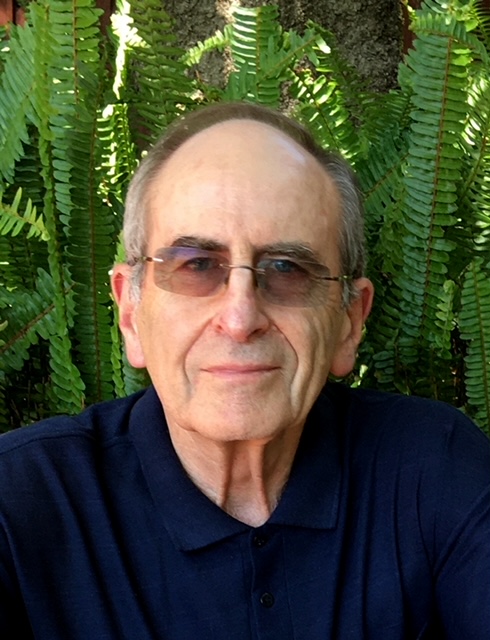
Alex Skovron’s new book, Switchpoints, is a collection of 100 narratives in prose and verse. It was published in March 2026. A link to the publishers, Puncher & Wattmann, can be found at the foot of this page.
A philosopher sets about compiling an encyclopaedia of embraces; an artist accuses her mirror of a lifetime of dishonesty; a flâneur collects melodies from the faces of passing strangers; an author envisions the ultimate map charting every single move of his existence; a girl dreams of a magic box that would tell her everything …
Switchpoints, Alex Skovron’s twelfth book, is a collection of 100 short narrative pieces, some in prose, others in verse. It is inhabited by a broad assortment of individuals of all ages, from children to the elderly, visited at particular and possibly significant moments in their daily life—moments of doubt or discovery, inertia or inspiration, of personal reflection, reminiscence or philosophical musing. There are skewed apprehensions and tender recognitions, lingering regrets and poignant realizations—‘switchpoint’ moments that trigger a jolt in thought or demeanour, or signal a shift in viewpoint or sense of self; or may not. The prod might be a line from a novel or poem, a painting or a piece of music, a landmark, a famous disaster, or perhaps no more than a sudden idea, a fading dream or an elusive recollection. Underpinning it all is a fascination with the workings of mind, the riddles of memory, the mystique of time.