• Tara Mokhtari

    Tara Mokhtari

    Dr. Tara Mokhtari is a Persian poet, born in Canberra, residing in New York City. Poetry is deeply ingrained in Persian culture and in the spirit of Persian people, and Mokhtari’s mother, Pari Azarmvand Mokhtari, is a world expert in Hafez. Mokhtari wrote her first poem at age 13, and a few years later, upon pausing to take a breath between the first two stanzas of Stevie Smith’s poem ‘Black March,’ Mokhtari made the conscious decision (which was likely made in and by the universe much earlier) that poetry was her life’s work. As a postgraduate student at RMIT University for both her PhD and Masters creative projects, Mokhtari wrote verse novels, which accompanied critical dissertations on modern poetry and poetics. Stevie Smith remained at the center of Mokhtari’s research during these years.  

    While poetry is her most enduring love, Mokhtari writes across the creative media. She was a founder and the in-house playwright of Canberra theatre company, The Nineteenth Hole (est. 2001), and was commissioned to write a play for Canberra’s preeminent independent company, Free Rain, when she was just 18. These plays earned multiple awards and nominations. Mokhtari went on to write for screen on assignment, most recently writing an original sci-fi feature film for Crick Films (Canberra) and a feature adaptation of a New York Times best-selling book for Barry Navidi (London/Los Angeles).  

    Mokhtari’s first collection of poetry, Anxiety Soup, was published in Australia by Finlay Lloyd Press (2013). The poems are connected thematically as snippets of daily life that shift the existential core of the speaker in some way. Mokhtari’s co-edited book of essays, Testimony, Witness, Authority: The Politics and Poetics of Experience, was published in 2013 by Cambridge Scholars Publishing. In 2012 and 2011, Mokhtari edited the English translations of two books by Dr. Hashem Rajabzadeh (Rikkyo University, Japan) who is a recipient of The Order of the Sacred Treasure in Japan for his lifelong work in introducing Persian culture to Japan.  

    The culmination of her work—creative, scholarly, and pedagogical—is Mokhtari’s book, The Bloomsbury Introduction to Creative Writing (2015), which is now in its second edition and has been translated into Simplified Chinese. The book has been adopted by university programs in the US, UK, Canada, and Australia, approaches creative writing as a form of knowledge that, for the writer, is symbiotically linked to experience.  

    Mokhtari is part of the wonderful faculty at CUNY Bronx Community College’s Communication Arts and Sciences department, and lives in Brooklyn with the world’s greatest cat, Malake. Mokhtari has given guest lectures at SUNY Oswego (NY), BRIC TV (NY), Victoria University (Melbourne), This Is Not Art Festival (New Castle), and her works are published in magazines and anthologies in the US, Australia, Prague, and beyond.  


    Open UNFURL /6, where you can read Tara Mokhtari’s poetry.

  • This happened …

    This happened …

    Late in 2019, the Australian prime minister (marketing guru and shitty-pants Scott Morrison, ‘Sco-Mo’ to you) and his theatre assistants removed the federal administration’s arts appendix. One moment the word ‘Arts’ appeared somewhere in the names of government departments, and the next it had gone. Snip! And he chucked it in the bin. 

    Well, not exactly… ‘Arts’ was removed from a department’s name. To compensate, the yarts (as they are called in Australia) got an office. The Office of the Arts: <https://www.arts.gov.au/>. Never have the arts and government been so closely aligned than in this uniform resource locator.  

    There were articles in newspapers, outrage on the arts websites, and a long rash of angry emojis at the end of comments on Facebook.  

    The conservative government in Australia, returned at the May 2019 election by a slender margin, had decided a feature of the victory after-party would be to show the country’s angry, artistic child the door. “Your mother and I are tired of you! Always with your hand out, and never a word of thanks! Get a job!” And then, the ‘clap’ of the fly-screen door and a barely audible ‘clack’ of its tiny snib that seemed to say, “And don’t come back.”  

    Making art is a patient, lonely business. Making any progress seems to require years of practice and a bit of luck. Guidebooks and internet articles about being an artist, full of advice and clichés, pile up very quickly. Be yourself. Tell your truth. Talent is important, endurance essential. In the age of Instagram, sexy drawings and a bubble-butt are handy, but not essential (or so they say). Governments are not needed, but academic sinecures, supervising doctorates in novel-writing or discussions of queer theory, good if you can get them. When universities are financially sous vide, as they will be emerging from the 2020–forever pandemic, place bets at long odds that the arts will be favored for rehabilitation.  

    Governments, truth be told, don’t want to help. The governing classes are too busy ‘governing,’ which might as well mean lying, or fudging, or crying crocodile tears, or making a killing on the stock market, or taking a holiday in Hawai’i. To be the governor is to be the winner, the one who calls the shots, to be ‘the decider.’ From their high station in life these decider-governors have a role in narrating our social experience. They have a role we give them in legislating to tell us what is and is not important. (Have you noticed how very often our prime minister tells us what is important, and how very important is the very thing he is now saying?) It’s been a long time since governors of any stripe have shown us how the arts and sciences are important. Business, the economy, the stock market, and jobs are important. Wages growth, arts, and science, women, not so much.  

    UNFURL, my arts publishing project, was a reaction to artists’ reactions to government biases against the arts. Who needs government money anyway? I thought. It turns out, lots of people working in the arts need audiences, and it’s not easy to find and maintain audiences without government assistance. And, even within my narrow range of interests—writing and visual arts—the connections between arts activity and funding are deep. Poetry is not the malnourished tenant of the attic it was in Australia in the mid-1980s. The long lists of books for review and the number of official insignia on web pages are two possible measures of this.  

    Logo, company name

Description automatically generated

    At the same time, long-established literary magazines have had their funding cut. There is money for the arts, so long as it is going to places where the expenditure can be seen to be spent. Government wants the internet to sing “Hey, big spender!” while it cuts funding to Meanjin and others. It may be partly Meanjin’s fault: it has had nearly thirty years to figure out how to get its great store of content online for prospective subscribers to access, while the failure to do so begins to look like obstinacy.  

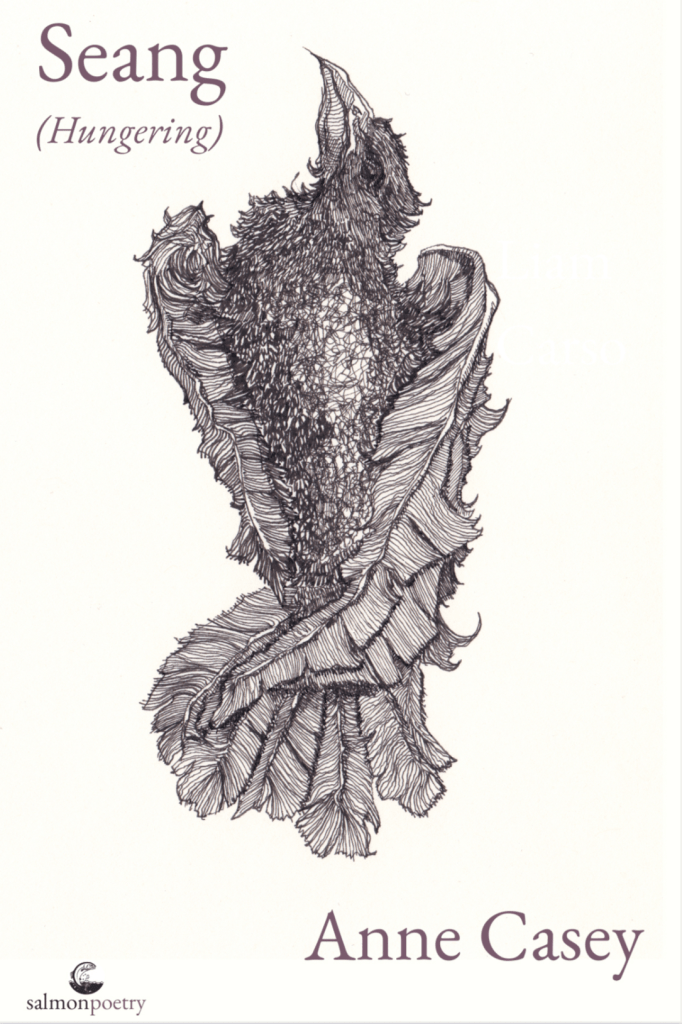
    UNFURL asked writers and artists to promote their own work to their own social media contacts while doing the same for other artists and writers: it’s a tool for artists to find new audiences and readers. UNFURL /1 started with a couple of writers I knew, Davide Angelo and James Walton, and a writer whom Angelo recommended, Anne CaseySusan Wald, also published in the first UNFURL, was a painter whose work I liked and who had an exhibition planned for early 2020. I wanted to establish a process that could lead to unexpected choices. I would try not to make selections. I wanted artists to select or recommend other artists; and I wanted those artists to choose for themselves what they wanted to show with as little mediation as possible, encouraging people to show and to publish work they liked, and that might not have been selected (or grouped together) by an editor or curator.  

    Government wants the internet to sing “Hey, big spender!” while it cuts funding to Meanjin and others. It may be partly Meanjin’s fault: it has had nearly thirty years to figure out how to get its great store of content online for prospective subscribers to access, while the failure to do so begins to look like obstinacy.

    It is more efficient to work on all one’s secret agendas simultaneously, so I should also admit my concern that belle-lettrist aesthetics (including the idea that poetry is language’s semantics incubator) and faux-modernist experimentation have combined to make poetry mostly irrelevant and a branch of marketing. —One only has to look at the writing being selected by the selectors to see that something is wrong with the practice of selection. As much as possible, I think, best to leave artists to make their own choices; and if there are mistakes, then, we’ll know who to blame. 

    And then, in March 2020 … then was the actual end of the world-as-we-knew-it. Those crazy ‘preppers’ I’ve made fun of started to look like visionaries. “Where the fuck is my bolthole, goddammit!?” and “How big is your bolthole, my friend!?” could have been common questions in some circles. People who could afford it, and had somewhere to go, did leave town. Gen-Xers lost their hospitality jobs, decided that they couldn’t afford their share house rent, and moved back ‘home.’ Artistes no longer had audiences. Artiste-enablers, stagehands, administrators and carpenters, were also out of work.  COVID-19 put the arts and sciences back in the news. 

    The intersectional tragedy of pandemic and conservative political hostility to the lefty arts seemed to many like another opportunity to turn indifference into punishment. It was hard to disagree with pundits who have been cataloging this punishment.   

    UNFURL, possibly because of all this, has done quite well. By the time UNFURL /5 was released, writers and artists could expect to reach about two thousand readers within a couple of weeks of publication. (Each new UNFURL number provided a little boost to the previous issues, so that all the issues now clock up numbers in the thousands.) Eighty per cent of readers were in Australia, and most of the rest in the USA, Canada, UK and Ireland. The male:female ratio of readers was almost 50:50. The largest age group of readers was 18–35 years. (Though if everyone is ten years younger on the internet, maybe that’s 28–45.)  

    It’s difficult to read poetry on small-screen devices, so I did not expect UNFURL to be read on phones. The visual arts component of UNFURL is quite effective on phones and tablets, however. It seems likely that readers interested in the writing in UNFURL resorted to their desktops and printers. Sixty to seventy percent of downloads of UNFURL were to mobile and tablet devices.  

    I learned that women writers (poets) had a ‘stronger’ following among women readers than men had among readers of any kind. It was very apparent, with Gina Mercer, for example, that a very significant number of readers returned more often, subscribed more often, and were women.  

    I learned that women writers (poets) had a ‘stronger’ following among women readers than men had among readers of any kind. It was very apparent, with Gina Mercer, for example, that a very significant number of readers returned more often, subscribed more often, and were women.  

    I learned that social media isn’t the be-all and end-all of connecting with an audience. Old-fashioned email also works really well. Some artists and writers had no significant social media presence but used email effectively to communicate with friends and contacts.  

    I also learned that visual artists were, generally speaking, more enthusiastic and positive about using social media, and even better at basic stuff like answering messages. Visual artists be like Molly Bloom; writers be like Prince of Denmark.  

    I found that both writers and artists did things in UNFURL other publications might not permit (requiring, as they mostly do, first publication rights). Philip Salom published groupings of new and old poems. Alex Skovron published poems, prose, paintings, and drawings. Steven Warburton published a series of pictures about how one canvas evolved over several years. Robyn Rowland published poems and their translations into Turkish for her readers in Turkey. Ron Miller published a brief survey of his life’s work in space art.  

    All that and more to come.  


    Published first on the website of Stephen J Williams.

  • unfurl /5

    unfurl /5

    Ron Miller, Datsun Tran, Philip Salom, Marcia Jacobs, Ellen Shelley

    Davide Angelo, Stuart Barnes

    Screenshots (~10MB PDF)

  • Ron Miller

    Ron Miller

    After graduating from art college (I have a BFA in Illustration), I worked for several commercial art studios doing illustrations for advertising.

    I had always been a fan—for literally as long as I can remember—of both science fiction and astronomy so in my spare time I enjoyed creating realistic scenes set on other worlds. Much of my inspiration for doing this came from my admiration for Chesley Bonestell.

    Learning that the new National Air and Space Museum in Washington, DC was going to have a planetarium, I wrote to the director, asking if they had any plans to have a staff artist. No, he replied, but it sounded like a good idea. My wife and I soon found ourselves on our way to the nation’s capital.

    I worked for NASM for four years before leaving to become a freelance illustrator … which is what I have done for the past 40+ years. I had my first book published shortly after leaving the museum—Space Art: a history of space painting—and my 60th book will be appearing this winter. It’s a lot of fun working on one’s own books: you not only get to write it you get to illustrate it, too. Admittedly, this hasn’t been universally true: several of my books have few if any illustrations by me. For instance, my biography of artist Chesley Bonestell or my histories of space travel and spacecraft. I have also written several novels … and even created a comic book series.

    I have also created postage stamps (one of which is attached to the New Horizons spacecraft, now deep in the Kuiper Belt), and have contributed production art to several motion pictures, such as David Lynch’s Dune.

    About 80 or 90 percent of what I do today is in the realm of scientific illustration … primarily space and astronomy-related art. Some of the clients I work for regularly are Astronomy Magazine and Scientific American. But I also do a lot of book covers, which is something I especially enjoy doing…if for no other reason than that they make a really nice change of pace after doing planets all day.

    While all of my space art had been originally created using traditional media—acrylics on illustration board—I made the switch to painting digitally almost 20 years ago … largely because it was easier meeting my deadlines. However, I still do space art in real paint and with real brushes just for my own satisfaction.

    The goal of all my space art is to convey the reality of other worlds … that they are just as real and substantial and beautiful as our own planet. I want people who see my art to believe that they are seeing places that they might very well be able to visit themselves.


    Photo: Ron Miller, with his Hugo Award from World Science Fiction Society. 

  • Philip Salom

    Philip Salom
    Philip Salom

    Philip Salom was born in Western Australia and lived in the state’s South West farming areas. During this time he also studied and worked in cattle research and agricultural extension. After several years of painting he turned to writing.

    Since 1980 he has produced fourteen books of poetry and five novels. His awards for poetry have been both national and international, and include twice winning the Commonwealth Poetry Book Prize in London, the Western Australian Premier’s Prize (twice) and the Newcastle Poetry Prize (in 1996 and again in 2000). Philip has also been recognised with the prestigious Christopher Brennan Award, a lifetime award for poetry “of sustained quality and distinction”.

    His collection The Well Mouth was named a Sydney Morning Herald Book of the Year, and Adelaide Review Book of the Year. Two slightly unexpected collections by Salom are written through his heteronyms—The Keeper of Fish by Alan Fish, and Keeping Carter by MA Carter. In 2015 Philip published the poetry trilogy Alterworld which includes Sky Poems, The Well Mouth and the new section Alterworld in a searching and strange interrogation of history and consciousness through imagined human ‘worlds’.

    His novels have also attracted wide-ranging acclaim—through reviews in major papers, journals and award lists. The Returns was shortlisted for the 2020 Miles Franklin Award and the Queensland Premier’s Prize. In 2016, Waiting was shortlisted for the Miles Franklin and the Prime Minister’s Award. His two earlier novels are Toccata and Rain which was shortlisted for the ALS Gold Medal and the WA Premier’s Prize for Fiction, and Playback which won the WA Premier’s Prize for Fiction.

    His new novel is The Fifth Season, a story based around missing persons and disappearances and, perhaps more strangely, the phenomenon of found people: people who are found dead, their identities unknown or erased.

    He has read as a guest writer in America, Canada, Britain, the Republics of Serbia and Macedonia, Italy, Singapore and New Zealand.

    Read Philip Salom’s poetry

  • Datsun Tran

    Datsun Tran

    Datsun Tran is an Australian multidisciplinary artist, his work primarily features the natural world, though it is about us, the human story. His work has explored themes of conflict and utopia, filtered through the lens of what we have in common, rather than what separates us.

    Tran has exhibited extensively in Australia, as well as North America, Asia and Europe. He has had over twenty-five solo and group shows, exhibited in over thirty art fairs, and has been a finalist in over thirty-five art prizes.

    Datsun Tran’s website

  • Ellen Shelley

    Ellen Shelley

    Ellen Shelley grew up in Adelaide. Her life changed considerably when she entered the ARMY at aged 18. She travelled extensively around Australia and overseas in the Signals Core. She has now settled by the harbour in Newcastle where she continues to raise her four children while enjoying the passion of writing poetry with purpose and direction.

    She writes in response to real-life events, and her own and others’ emotions. She publishes on various platforms, she says, “including a sidewalk in Adelaide, but you can only read it when it rains.”

    Ellen’s writing speaks of a diverse range of struggles. It delves into the mundane, how she arrives there with or without acceptance. Her voice carries a mother’s tone. It is strong without denying her weakness, alone in a fight, shared by many. These poems emerge from a place of digging around the wires of disconnect, the not fitting in. Raised in a family of stepbrothers and stepsisters and a procession of stepmothers, she soon learnt the art of resilience and the need to find her own voice in the world

    Her favourite quote is by Robert Frost: «For me the initial delight is in the surprise of remembering something I didn’t know I knew. I have never started a poem yet whose end I knew. Writing … is discovering.»

  • Marcia Jacobs

    Marcia Jacobs

    Melbourne-born Marcia Jacobs lived in New York (1977–93) where she worked as editorial assistant at Doubleday Publishing for Jacqueline Kennedy Onassis. On her return to Australia, Marcia devoted her time to teaching and more recently, writing. Her essays and poems have appeared in various literary journals and anthologies here and abroad. These include MeanjinWesterlyPoetica MagazineVoices Israel and Singing For All He’s Worth—Essays in Honour of Jacob G. Rosenberg (Picador).

    Marcia is the daughter of the late Australian poet and author Jacob G. Rosenberg, winner of the National Biography Prize (2007) for his memoir East of Time.

    She is also the mother of three daughters, each one an artist in her own right.

  • unfurl /4

    unfurl /4

    Steve Cox, Gloria Stern,
    Ali Whitelock, Steve Warburton, Sebastian Steensen

    Screenshots (~10MB PDF)

  • Gloria Stern

    Gloria Stern

    Gloria Stern is a visual artist currently living and working in Melbourne, Australia. She grew up in Melbourne and originally trained in Graphic Design. After working in the design industry for several years both in England and Australia, she then switched across to full time painting. Since 1996, she has had 12 solo exhibitions and has been included in numerous group shows.

    Gloria’s paintings have been acquired for private collections in Australia, UK, USA, and New Zealand. Her works are also featured in the collections of Cowan Design, Melbourne, and the City of Boroondara Collection, Melbourne.

    I have always been interested in exploring both figuration and abstraction in my painting, however, over the last couple of years, I made a conscious effort to remove the figurative element from my work in order to explore spatial relationships, colour and atmosphere within abstraction more deeply. This body of work led up to my last solo exhibition “Altered Space” in 2019. Since then, my interest in the figure is returning, but I think, in a less literal way than before. I am currently exploring ways of using figurative elements as more integrated abstract shapes, that allow for a freer interpretation of meaning.

    Gloria Stern

    Website: ‹www.gloriasternart.com

    Instagram: ‹www.instagram.com/gloriasternart

    Facebook: ‹www.facebook.com/gloria.stern.18