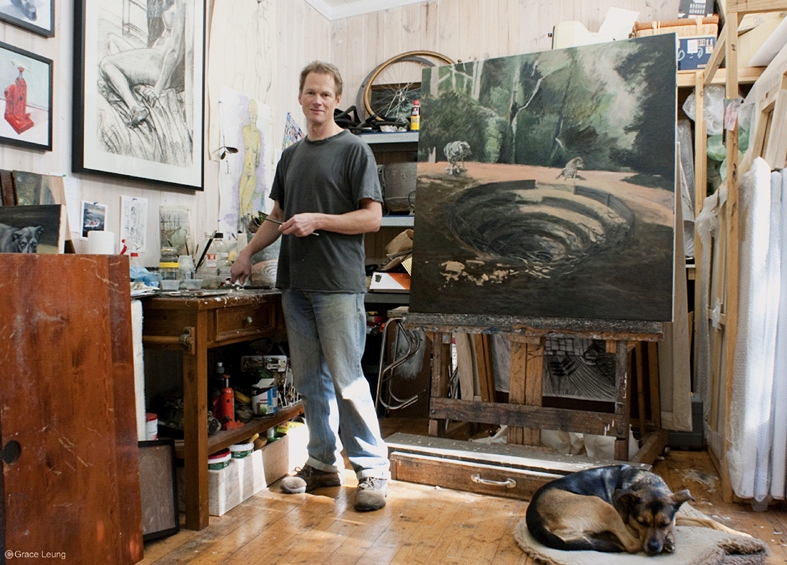
Datsun Tran is an Australian multidisciplinary artist, his work primarily features the natural world, though it is about us, the human story. His work has explored themes of conflict and utopia, filtered through the lens of what we have in common, rather than what separates us.
Tran has exhibited extensively in Australia, as well as North America, Asia and Europe. He has had over twenty-five solo and group shows, exhibited in over thirty art fairs, and has been a finalist in over thirty-five art prizes.
Ellen Shelley grew up in Adelaide. Her life changed considerably when she entered the ARMY at aged 18. She travelled extensively around Australia and overseas in the Signals Core. She has now settled by the harbour in Newcastle where she continues to raise her four children while enjoying the passion of writing poetry with purpose and direction.
She writes in response to real-life events, and her own and others’ emotions. She publishes on various platforms, she says, “including a sidewalk in Adelaide, but you can only read it when it rains.”
Ellen’s writing speaks of a diverse range of struggles. It delves into the mundane, how she arrives there with or without acceptance. Her voice carries a mother’s tone. It is strong without denying her weakness, alone in a fight, shared by many. These poems emerge from a place of digging around the wires of disconnect, the not fitting in. Raised in a family of stepbrothers and stepsisters and a procession of stepmothers, she soon learnt the art of resilience and the need to find her own voice in the world
Her favourite quote is by Robert Frost: «For me the initial delight is in the surprise of remembering something I didn’t know I knew. I have never started a poem yet whose end I knew. Writing … is discovering.»
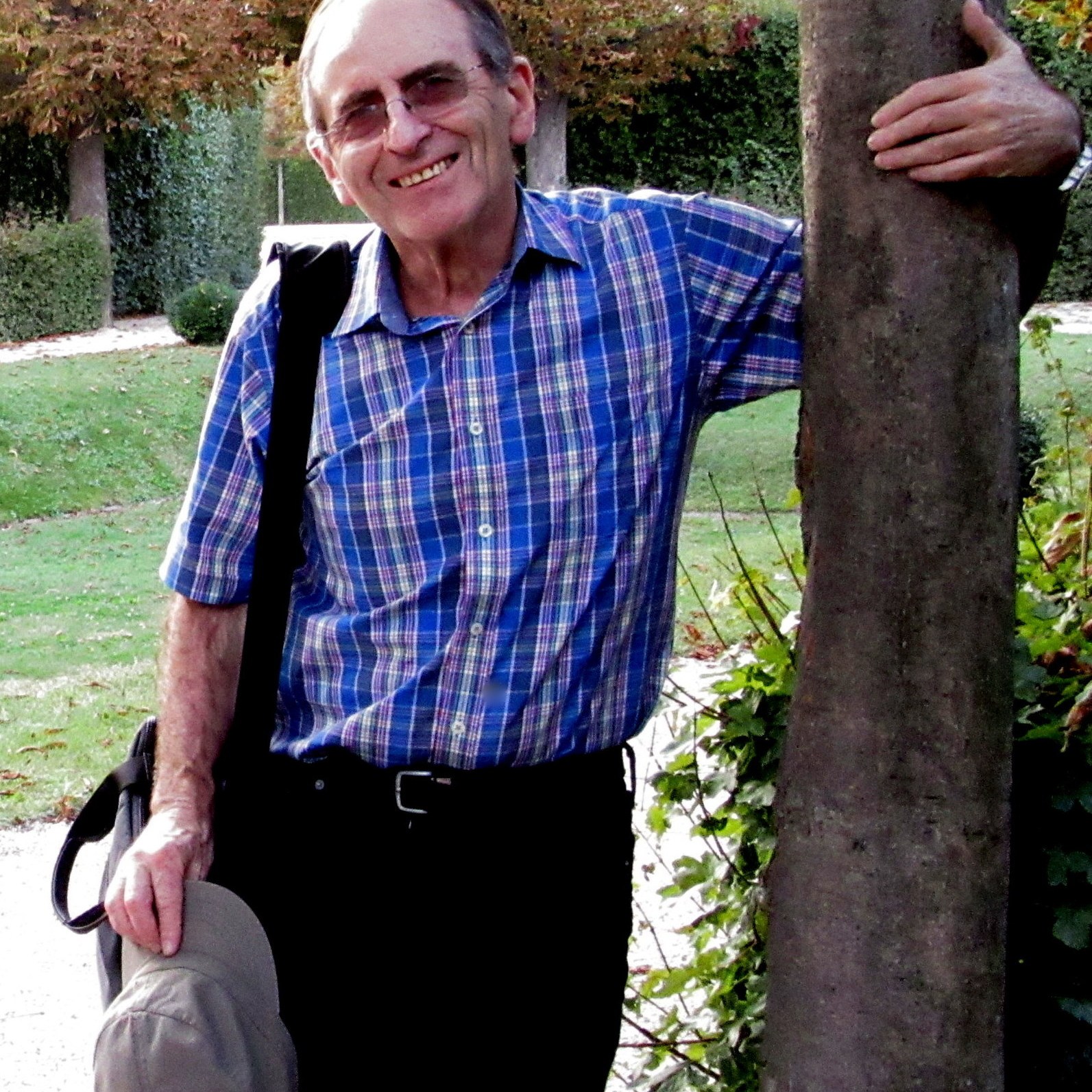
Melbourne-born Marcia Jacobs lived in New York (1977–93) where she worked as editorial assistant at Doubleday Publishing for Jacqueline Kennedy Onassis. On her return to Australia, Marcia devoted her time to teaching and more recently, writing. Her essays and poems have appeared in various literary journals and anthologies here and abroad. These include Meanjin, Westerly, Poetica Magazine, Voices Israel and Singing For All He’s Worth—Essays in Honour of Jacob G. Rosenberg (Picador).
Marcia is the daughter of the late Australian poet and author Jacob G. Rosenberg, winner of the National Biography Prize (2007) for his memoir East of Time.
She is also the mother of three daughters, each one an artist in her own right.
Gloria Stern is a visual artist currently living and working in Melbourne, Australia. She grew up in Melbourne and originally trained in Graphic Design. After working in the design industry for several years both in England and Australia, she then switched across to full time painting. Since 1996, she has had 12 solo exhibitions and has been included in numerous group shows.
Gloria’s paintings have been acquired for private collections in Australia, UK, USA, and New Zealand. Her works are also featured in the collections of Cowan Design, Melbourne, and the City of Boroondara Collection, Melbourne.
I have always been interested in exploring both figuration and abstraction in my painting, however, over the last couple of years, I made a conscious effort to remove the figurative element from my work in order to explore spatial relationships, colour and atmosphere within abstraction more deeply. This body of work led up to my last solo exhibition “Altered Space” in 2019. Since then, my interest in the figure is returning, but I think, in a less literal way than before. I am currently exploring ways of using figurative elements as more integrated abstract shapes, that allow for a freer interpretation of meaning.
Steven Warburton is currently working (in Emerald) and exhibiting in Melbourne, Australia. Since completing a Fine Arts degree at Monash University, Steve has exhibited widely, in group and solo exhibitions. His paintings and drawings are held in collections Australia-wide and internationally.
As an artist’s work is a reflection of his or her emotions, ideals, thoughts and influences, it is necessary to understand the importance the work plays in the artist’s life.
My work is the direct result of things that I have borne witness to, overheard in conversations, observed in the media or dreamt. It reflects my right to express my thoughts, in a way I hope will be accessible to the viewer, both aesthetically and literally.
As the world around us changes, the environment, the politics, our society, thus my imagery changes too.
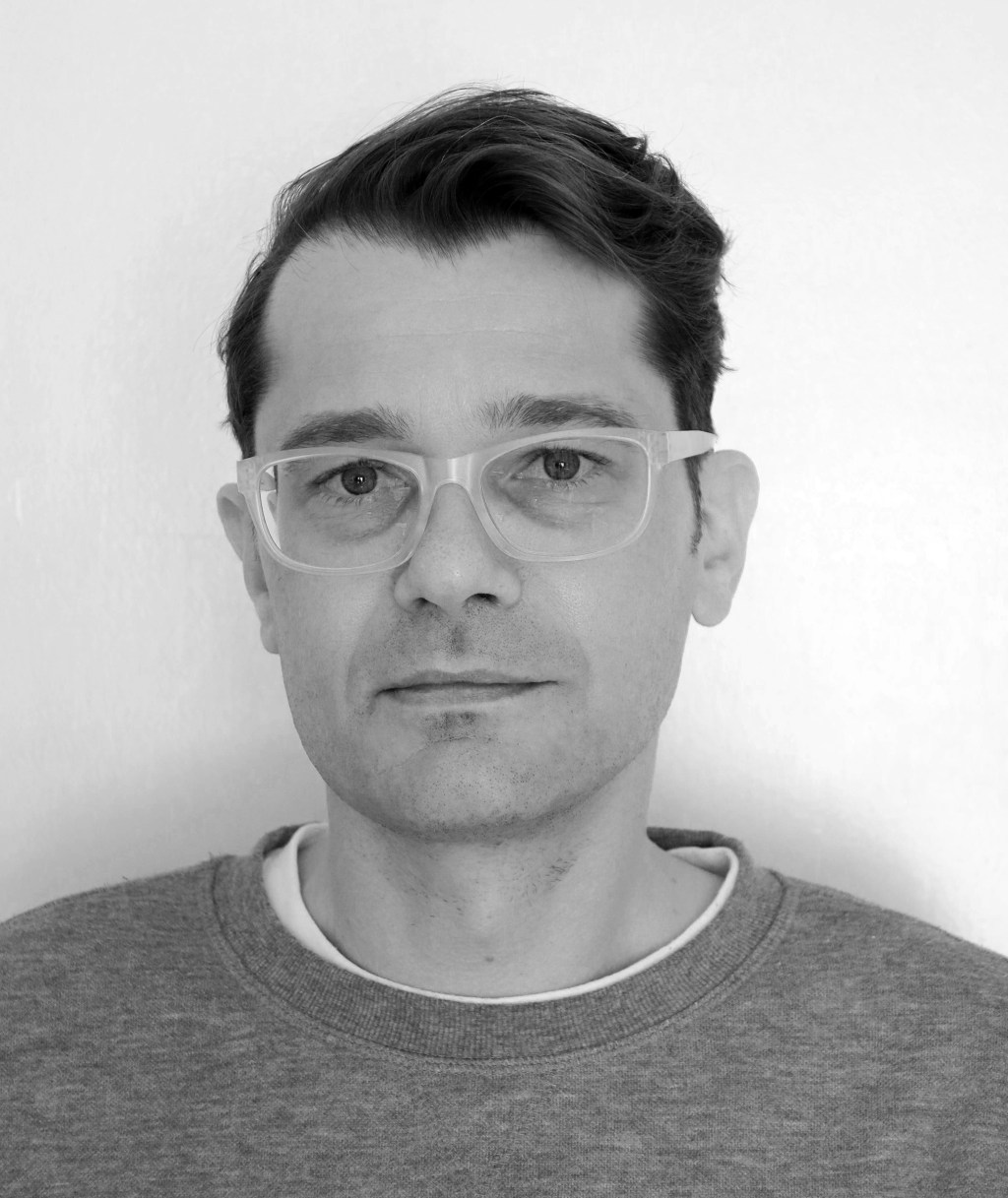
Sebastian Steensen is a Melbourne-based artist who has worked for over 20 years in the areas of painting, drawing and, occasionally, printmaking and photography.
After tertiary studies in Fine Arts, and a stint as an art teacher in China, I’ve staged a few one-person exhibitions, and been included in group exhibitions.
My work is strongly figurative, and it follows the tradition of western narrative painting. I believe it is informed by my drawing ability. But, technically, I always wish to combine this with painterly aspects, by which I hope to move the imagery beyond illustrational ‘recording,’ into more robust psychological territory.
Lee James Shott was born in Aberdare in the Cynon Valley area of Rhondda Cynon Taf, Wales (UK), and holds an M.A. in Fine Art.
Shott’s paintings subjectively capture the contemporary culture of communities throughout South Wales. The work focuses on human interactions and the idiosyncrasies of his daily life, observations of people and their interactions, night-time walks, and commuting by public transport.
Shott paints both landscapes and portraits that are at once psychological and voyeuristic, implying that the viewer is surveying and surveilling his environments and subjects.
The work, seen as a whole, includes portraits with blurred and fragmented features along with figurative images of workers and young people. His landscape paintings often show machinery in the green valleys of South Wales. Each painting is a precise, and precisely ambiguous, moment of life.
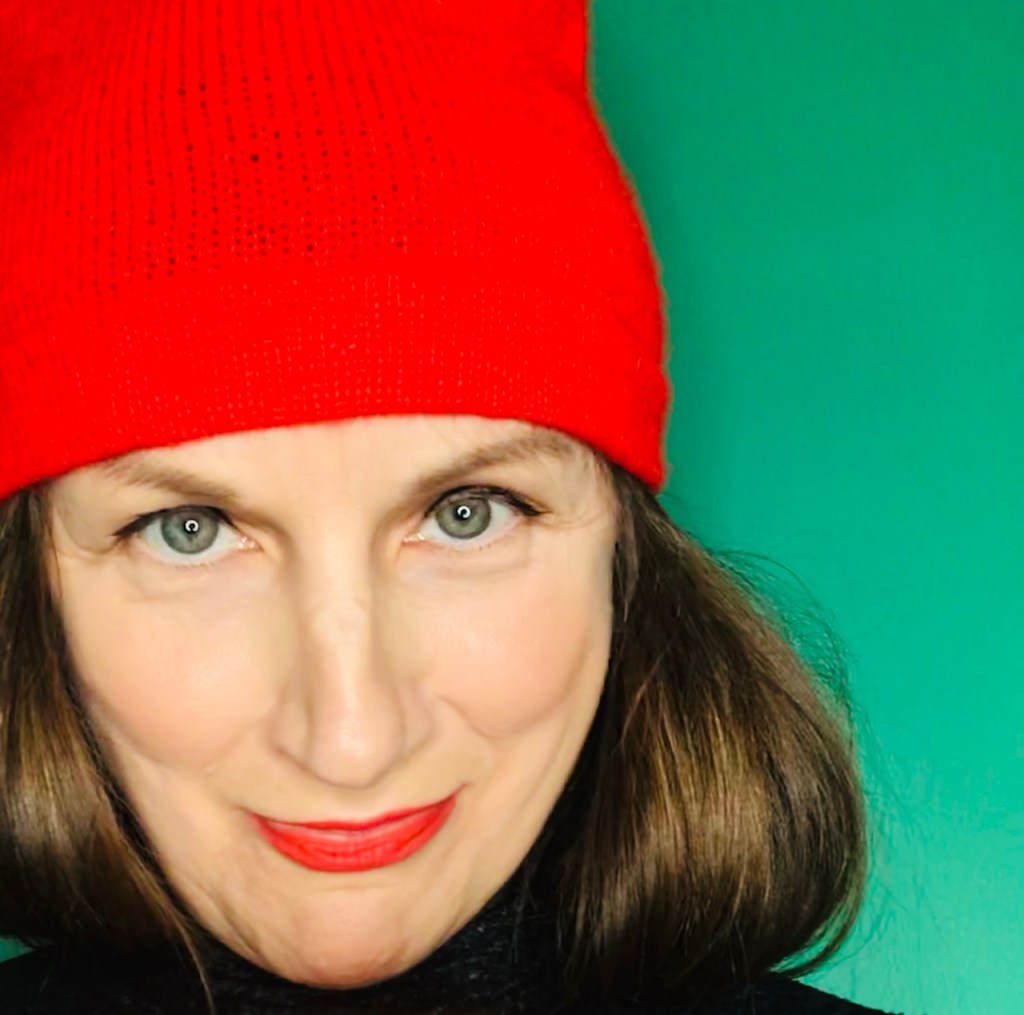
Ali Whitelock is a Scottish poet and writer living on the South coast of Sydney with her French, chain-smoking husband. Her latest poetry collection, the lactic acid in the calves of your despair, is published by Wakefield Press and her debut collection, and my heart crumples like a coke can (Wakefield Press, 2018) has a forthcoming UK edition by Polygon, Edinburgh. Her memoir, Poking seaweed with a stick and running away from the smell, was launched at Sydney Writers Festival to critical acclaim in Australia (2008) and the UK (2009).
Poetry was not something I ever thought was for me. I hated it in school and never read it as an adult. Then I turned fifty and, by some bizarre twist of fate, started writing my own.
The more poets I got to know, the more I was astonished to learn that many of them had been writing poems since they could hold a pen and had parents who’d recite verse to them morning, noon and night. How I longed for one of those poetic pipe-smoking fathers in corduroys sporting a tweed jacket with leather elbow patches, who’d read poetry to me in the evening by a roaring log fire. In my childhood, the only poem remotely hinted at in our house was ‘A Red, Red Rose’ once a year on St Valentine’s day. In short, our house was empty of poetry, literature, logs and books in general.
In an interview, brilliant Scottish writer Andrew O’Hagan told the interviewer there were no books in his home when he was growing up. After the interview Andrew’s father called him, more than a little annoyed, “What do you mean, you grew up in a house with no books? Sure there was a green book sitting on top of the fridge for years!” To which Andrew replied, “Dad, that was the Kilmarnock phone directory.” So the great Andrew O’Hagan and I shared similar book-less upbringings, but clearly that’s where the similarities between us end.
Two-thirds of the way through high school I was removed from the English class in order to make way for a student with more promise. I was put into geography. It wasn’t entirely useless—I can now read an ordnance survey map with great confidence, name the deepest ocean at the drop of a hat, dazzle at dinner parties trundling out the capital cities of the world like a trained chimpanzee.
Eventually I ran away from my geographical and non-bookish past in Scotland to Australia. Did my past catch up with me? Absolutely. But Australia offered me something Scotland at that time did not: endless skies, super-sized servings of ‘she’ll be right’; affordable therapy and a chance happening upon a secondhand book, when I was forty nine, called Eight American Poets. When I opened its pages I discovered John Berryman, Robert Lowell, Sylvia Plath, Anne Sexton. My mouth fell open like a drawbridge and I allowed these poems to march on in.






 UNFURL